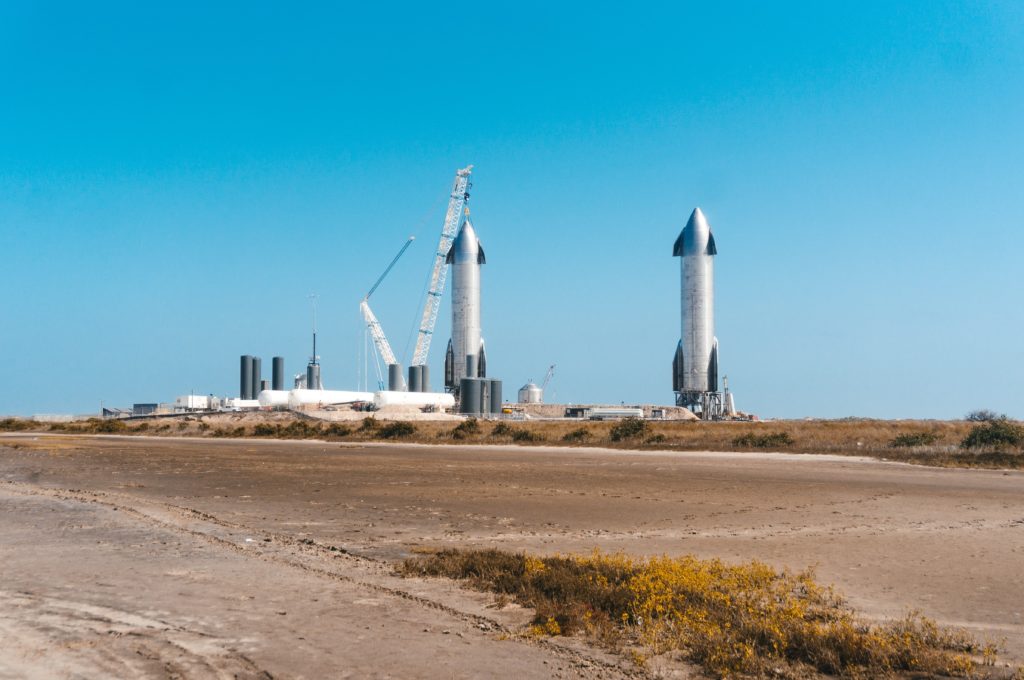
Boca Chica Beach survived its strangest civic test this week. The U.S. Board on Geographic Names rejected a proposal to rename the historic South Texas beach “Cyber Beach,” voting unanimously against the change after nearly 2,780 emails opposed it and only one supported it. The proposal came from a Mississippi man tied to SpaceX and Cybertruck fan culture, not from SpaceX itself, and federal officials rejected it after local opposition overwhelmed the process, as MyRGV reported and KRGV reported.
The vote preserved more than a name on a federal map. It preserved a local memory. Boca Chica Beach has carried that name for generations, and the proposed change would have placed a public shoreline long used by Brownsville families under the language of rockets, Cybertrucks, and corporate fandom. For many residents, the proposal felt less like a harmless nickname and more like the latest sign that Boca Chica’s identity was being rewritten around SpaceX.
Local resistance moved fast. The South Texas Environmental Justice Network urged residents to contact the federal board, arguing that Boca Chica carried cultural ties for families who had fished, swum, gathered, and visited there for generations. Brownsville Mayor John Cowen wrote on Facebook that he strongly opposed renaming Boca Chica Beach as Cyber Beach and asked residents to make their views known. State Rep. Erin Elizabeth Gámez also opposed the proposal in a public statement, while State Sen. Adam Hinojosa said South Texas could welcome investment and innovation without changing the beach’s historic name in his own public post.
SpaceX itself did not file the petition, and that distinction matters. But the backlash showed how deeply SpaceX’s presence has altered the civic imagination of Cameron County. Even when the company is not formally asking for something, its cultural gravity now frames the argument. A private space company arrives. A company town forms. Rocket tourists come. A beach gets discussed in the language of a product line. Residents then have to organize simply to keep the old name of the place they already knew.
Before Starbase, There Was Boca Chica
Boca Chica has never been just empty sand east of Brownsville. The name means “little mouth,” a reference to the geography near the mouth of the Rio Grande. The Texas State Historical Association describes Boca Chica Bay as lying in the extreme southeastern part of Cameron County, bounded by Brazos Island, Del Mar Beach, Boca Chica Beach, and Mesa del Gavilán.
For generations, Brownsville families treated the drive down Highway 4 as a local ritual. Boca Chica was the beach without the commercial polish of South Padre Island. It was where people could fish, camp, swim, surf, birdwatch, and sit close to the Gulf without paying for a resort atmosphere. Visit Brownsville describes Boca Chica Beach as more than 1,055 acres of outdoor recreation, including swimming, birding, camping, fishing, and surfing.
The surrounding landscape carries a history far older than Starbase. Del Mar, on Boca Chica Island off State Highway 4, had summer homes and bathing beaches used by Spanish ranchers from Matamoros before the Mexican Revolution, and by the mid-20th century it had tourist facilities, a church, and supply houses for fishermen, according to the Texas Almanac. Nearby, the Palmito Ranch battlefield marks the site of the final land battle of the Civil War, fought May 12-13, 1865, east of Brownsville near the Rio Grande.
That older history explains the anger over “Cyber Beach.” The phrase sounded like an outsider’s nickname trying to become a public fact. Boca Chica already had a name, a history, and a community attached to it. Brownsville did not need a Mississippi rocket fan, a Tesla aesthetic, or federal mapmakers to reinvent it.
SpaceX Changed the Scale of Brownsville’s Future
SpaceX has not brought only harm. The company has put Brownsville and Cameron County into a national and global conversation that the region rarely received before. Elon Musk announced in 2024 that SpaceX would move its headquarters from Hawthorne, California, to Starbase near Brownsville, and the City of Brownsville publicly welcomed the decision. In the city’s official July 2024 announcement, Mayor Cowen said the move would continue investment in the region and put Brownsville “on the map at a much bigger level.”
The economic numbers are large. KRGV reported in 2026 that SpaceX had infused more than $13 billion into Cameron County’s economy between 2024 and 2026, supported more than 24,000 jobs, and contributed more than $305 million in indirect taxes, citing county officials. For Brownsville, a city long treated by outsiders as peripheral, that matters. Aerospace jobs, supplier contracts, tourism, engineering work, construction, hospitality, and workforce development can change the life of a region.
For young people in Cameron County, the sight of rockets rising from the coast may expand the sense of what kind of work is possible without leaving home. But economic transformation has a cost when it arrives faster than the institutions built to manage it. SpaceX is not merely another employer on the edge of town. It is a private aerospace giant operating beside public beaches, wildlife refuge land, residential communities, and a border coastline that had long belonged to ordinary local use. The real question for Cameron County is whether it can absorb that power without surrendering public control over the places that made the region itself.
The Beach Closures Became the Central Grievance
For many residents, the most immediate issue is access. Boca Chica Beach is reached by State Highway 4, the only public road connecting Brownsville to the beach. When launches, tests, or transport operations require closures, the public loses access not only to a road but to a shoreline that many Brownsville families considered their own informal backyard. Cameron County maintains a public page for Boca Chica and Highway 4 closure notices, and the City of Starbase now publishes beach and road access notices tied to SpaceX activity.
The fight has already reached the courts. In June 2026, the Texas Supreme Court ruled against environmental groups attempting to block Boca Chica Beach closures tied to SpaceX launches. The Texas Tribune reported that the court held private groups did not have the right to sue to enforce public beach access under the 2009 Texas constitutional amendment, leaving enforcement power with the state.
That ruling leaves residents in a difficult position. Texas law recognizes public beach access, but the practical enforcement of that access now depends heavily on state and local officials. Meanwhile, closures continue. Encroachment does not have to arrive as a fence or a deed transfer. It can happen through repeated closures, emergency orders, special legislation, environmental exceptions, and the slow normalization of inconvenience. One closure may be reasonable. Many closures begin to alter the public’s relationship with its own coast.
Environmental Concerns Have Not Gone Away
The environmental record is also part of the public unease. Boca Chica is surrounded by sensitive habitat: refuge land, tidal flats, shorebird areas, sea turtle nesting beaches, mangroves, and the rare lomas that define parts of the Lower Rio Grande Valley coast. The U.S. Fish and Wildlife Service describes the Lower Rio Grande Valley National Wildlife Refuge as a major conservation corridor with nearly 40,000 acres open for wildlife-related recreation.
The April 2023 Starship test flight became a turning point in the public debate. Texas Public Radio published photographs and reporting showing debris around the launchpad and particulate matter reported in nearby Port Isabel after the rocket exploded. For residents who had already watched beach access become more restricted, the debris and dust became part of a larger concern: that the cost of the new space economy was being carried by a coastline with less political power than the company reshaping it.
Federal regulators have not treated every impact claim the same way. The Federal Aviation Administration issued a mitigated finding of no significant impact for increased Starship/Super Heavy launch cadence at the Boca Chica launch site, meaning the agency allowed the program to proceed with mitigation measures attached. That official finding is part of the record too. But the debate has continued because the lived experience of nearby residents, beach users, and environmental groups has not always matched the dry language of mitigation.
Supporters argue that rocket testing is inherently difficult, that failures produce data, and that SpaceX has made changes after incidents. That is true as far as it goes. But Boca Chica is not a desert test range sealed away from public life. It is a living coastline beside a working-class border city, a wildlife refuge, fishing waters, historical land, and a public beach. The burden of proof should be high when the blast radius includes places that belonged to the public long before the rockets arrived.
Starbase and the Company-Town Problem
The creation of Starbase sharpened the concern. In May 2025, voters living around SpaceX’s launch and production site approved incorporation of Starbase as a city by a vote of 212 to 6, and the Texas Tribune noted the small electorate and the presence of many SpaceX employees among residents. The vote turned a company-dominated launch settlement into a municipal government with public powers.
Before the election, the Texas Tribune explained that Starbase would become a Type C municipality with a commission form of government: a mayor and two commissioners elected by residents. The city’s leaders would be required to hold public meetings, maintain records, and operate under Texas public information law. SpaceX leaders framed incorporation as a way to streamline the process of building amenities for workers and future residents.
There is a legitimate case for incorporation. A growing community needs roads, utilities, emergency planning, permits, records, and basic governance. But Starbase is unusual because the community’s identity, economy, workforce, and political structure are so closely tied to a single company. When the company is also seeking more launches, more land, more infrastructure, and more control over nearby movement, residents outside Starbase naturally worry that local government may become another instrument of corporate expansion.
The land-exchange fight adds to that concern. The U.S. Fish and Wildlife Service explored a potential land exchange with SpaceX in the Lower Rio Grande Valley, where federal refuge land would move into SpaceX ownership and SpaceX-owned land would move into federal ownership. The agency later issued a final environmental assessment and finding of no significant impact for the exchange. Whether one sees that exchange as rational land management or a giveaway depends largely on how much trust one has left in the process. The Cyber Beach fight suggests that trust is thin.
Why the Cyber Beach Vote Predicts the Future
The 11-0 vote against “Cyber Beach” was a victory for local memory, but it also served as a warning. The next fights may not be as simple as a bad name on a federal agenda. A name can be defeated in a day. Land-use policy, beach access, environmental permitting, municipal authority, tax incentives, housing pressure, and public infrastructure are harder to reverse once settled.
The future of Boca Chica will likely be decided through a series of technical decisions that sound small at first: another closure window, another permit, another zoning change, another land exchange, another launch approval, another public-private agreement, another road delay, another effort to formalize what SpaceX already does in practice. The Cyber Beach proposal mattered because it compressed that whole pattern into one phrase. People heard “Cyber Beach” and understood the direction of travel.
It also showed that local opposition is not powerless. Residents, activists, county officials, state lawmakers, and city leaders moved quickly enough to force the issue into public view. Cowen opposed the change publicly. Gámez and Hinojosa followed. Local objections had already been filed months before the vote, and even Starbase leaders opposed the change, KRGV reported.
That coalition may not hold on every issue. Some people oppose SpaceX almost entirely. Others welcome the jobs and investment but want stricter boundaries. Many residents live somewhere in the middle: proud that Brownsville is on the map, tired of being treated as if the map began when Musk arrived.
The Deal Brownsville Should Demand
Brownsville and Cameron County do not need to reject SpaceX to defend Boca Chica. They need to govern it. Public beach access should be treated as a central civic right, not a scheduling inconvenience. Closure data should be transparent, easy to find, and regularly audited. Local residents should receive meaningful notice before decisions that affect the beach, the road, the refuge, or the historic landscape. Environmental monitoring should be independent, not dependent on the company’s own preferred framing. Land exchanges involving refuge property should be judged by public benefit, not merely by whether they make operations easier for SpaceX.
The positives are real: jobs, investment, tourism, global attention, and a possible aerospace future for South Texas. The negatives are also real: closures, noise, debris, habitat risk, legal fights, housing pressure, and a creeping sense that public land is being reorganized around a private company’s ambitions. The beach-access ruling, the land-exchange fight, and the Cyber Beach backlash all show that SpaceX’s expansion is no longer only an economic story. It is now a governance story.
Boca Chica does not have to be sealed off from change to be protected. Brownsville has always lived with movement: the border, the port, the Gulf, storms, trade, migration, war, faith, family, and reinvention. But there is a difference between progress and erasure. A region can welcome industry without surrendering memory. It can accept investment without letting public land become a corporate backdrop. Boca Chica’s name should remain because it carries what no launch tower, company town, or passing tech obsession can replace: the history of the people who knew it first. Before the rockets, before Starbase, before Cybertrucks lined up for launch photos, Boca Chica already belonged to Brownsville. The fight now is to make sure it still does.