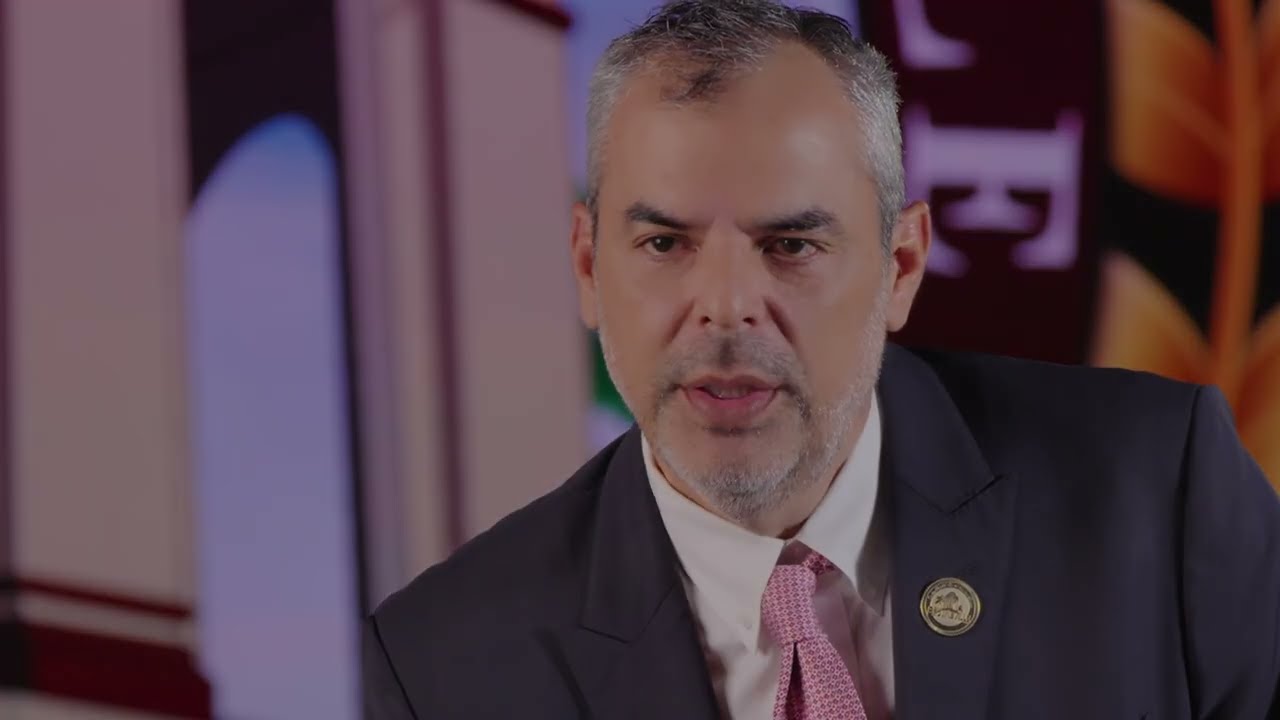
Brownsville’s dispute with Commissioner Gustavo De Leon’s family is no longer merely a complaint about land near the Rio Grande. It has become a test of whether City Hall can investigate itself when the public official representing the claimant is one of seven people who govern the institution and control its public purse.
De Leon says municipal employees entered family property, placed asphalt millings across a dirt route and continued after he contacted the city attorney, delivered a cease-and-desist letter and filed a police report. If accurate, that account may expose Brownsville to liability for trespass, property damage or uncompensated public use.
A local political blog has meanwhile claimed that the estate sought as much as $1 million and that De Leon personally negotiated with officials whose work he helps oversee. It has also raised questions about federal border-wall activity on the property. Those claims have not been established by a released demand letter, appraisal, contract, audit or court filing. The evidence does not prove corruption, criminal conduct or self-dealing. It does show that Brownsville has allowed an obvious conflict to develop without giving residents enough information to judge either the city’s conduct or the size of the claim.
A city crew entered the property and the city will not say why
In a KRGV interview, De Leon said he found city crews working on the property May 4, immediately contacted City Attorney Will Treviño and later walked the site with him several times. He said no owner had granted an easement or consented to the placement of used roadway material. De Leon said the operation continued for three days after he delivered a cease-and-desist notice and filed a police report. He described the tract as more than 10 acres, said the family had held it for over 90 years and said it was used to grow grass for hay. The city declined the station’s questions about authorization, purpose, cost and its response.
A separate KURV account said the completed route would remain temporarily while the family installed a gate and cameras to control access. That suggests the dispute concerns more than material left in a pile. A usable route now crosses land the family says is private, raising questions about who intended to use it and what destination it served.
Public works crews do not ordinarily move equipment onto a private tract and spread hundreds of cubic metres of material without a project number, supervisor or operational purpose. Records should exist: time sheets, vehicle logs, work orders, material tickets, photographs and instructions through Engineering and Public Works. Brownsville must establish who authorized the job, when supervisors learned of the objection and why the activity allegedly continued.
Improving an existing route rather than constructing a wholly new road would not settle the issue. Work on private land still requires authority. Yet a substantial damage claim cannot rest on the word “dumping” alone. The city and owners need an independent survey, material analysis and restoration estimate capable of distinguishing actual injury from a disputed improvement.
The settlement controversy emerged before the documents did
El Rrun Rrun alleged that De Leon initially demanded $1 million and later discussed figures between $700,000 and $900,000. The blog also asserted that he negotiated personally with the city attorney and city manager and that the claim would return for commission consideration July 21. Those figures remain unverified. No demand letter, settlement proposal or independent valuation confirming them has been released, and the blog’s descriptions of criminality go beyond the available evidence.
An agenda image published with the local coverage identifies a closed-session consultation involving “contemplated or pending litigation and/or settlement offer” related to Cameron County Appraisal District Property ID 30393. It lists the City Attorney’s Office and City Manager’s Office and includes a parcel map. That establishes that the property was placed before the commission as a legal matter. It does not establish the amount demanded, the advice commissioners received, whether payment was recommended or whether De Leon participated.
In a public statement, De Leon said he acted in good faith, cooperated with the city and supplied documentation. Those assertions deserve consideration. They do not replace an official record showing whether he filed a conflict affidavit, left every executive session, avoided privileged city strategy and used an independent representative to negotiate for the estate.
The property’s border history complicates the case
A 2018 commercial listing identified the land as 930 Mexico Boulevard, Tax ID 30393, containing 10.405 acres and offered for $895,000. The listing named Nora De Leon Ramirez as executrix, described the property as vacant and promoted its proximity to the Brownsville and Matamoros International Bridge. It confirms the parcel’s identity and historical marketing. It does not establish a current market value, completed sale or amount of damage caused eight years later.
The tract lies in a corridor shaped by federal border projects and complicated land rights. Beginning in 2007, the Department of Homeland Security used eminent domain across the Rio Grande Valley, producing years of litigation over access, compensation and properties divided by fencing. A ProPublica examination of one Brownsville case described landowners still disputing compensation a decade after the federal project began. Any federal easement, right of entry, lease, license or staging agreement affecting Property ID 30393 is therefore essential.
A federal condemnation docket identified Nora De Leon Ramirez among parties in a 2008 Southern District of Texas action styled United States v. 15.919 Acres of Land and reflects that she was dismissed in 2014. That shows earlier federal legal contact with land interests in the area. It does not prove Brownsville possessed a present right to enter this tract or that a current federal agreement exists. If border operations authorized the work, officials must produce the instrument and show it covered the location and material placed there.
The measurements do not describe one coherent claim
De Leon gave the television station two materially different descriptions of the affected area. The report referred to more than 17,000 square feet, about 1,579 square metres or 0.39 acre. De Leon also described approximately 0.94 acre, about 3,804 square metres. The larger figure is roughly 2.4 times the smaller one. The difference could reflect separate measurements, an imprecise interview answer or confusion between the route and a broader disturbed area. A professional survey must resolve it before damages are calculated.
At a stated depth of roughly five inches, or 12.7 centimetres, 17,000 square feet would contain about 262 cubic yards, approximately 200 cubic metres, before compaction. A 0.94-acre footprint at the same depth would contain about 632 cubic yards, approximately 483 cubic metres. At a nominal 20-cubic-yard truck capacity, that is roughly 13 loads versus 32. This is not a valuation. It shows why commissioners cannot rely on photographs, rough dimensions and an unverified price per load.
A defensible analysis would determine removal and disposal costs, soil and drainage restoration, harm to vegetation or agricultural use, temporary loss of use and any permanent decline in market value. It should also account for retained value if the owners keep a usable route. An old asking price, a tax appraisal, the market price of millings and the cost of restoring farmland answer different questions.
Texas law leaves room for a serious property claim. The state Supreme Court has explained that inverse condemnation generally requires intentional government action that takes, damages or applies property to public use. Its discussion of public-works damage stresses that affirmative conduct and governmental intent must be analyzed separately. City employees deliberately placing material may satisfy part of the inquiry, but the operation’s purpose, authority and actual effect remain unresolved.
De Leon’s dual role demands more than a final recusal
De Leon has the same right as any property representative to stop an unauthorized entry and seek compensation. His office does not require his family or the estate to surrender property rights. But he is not an ordinary claimant’s representative. He sits on the body that governs Brownsville, approves expenditures and collectively appoints the city manager. His official biography says he was elected in May 2025 after nearly three decades in public service, including supervisory work with U.S. Customs and Border Protection and almost four years mentoring security personnel through the U.S. Embassy in Mexico City. That background should bring heightened regard for documentation, boundaries and chain of command.
Texas conflict-of-interest law requires a local official with a substantial interest in affected real property to disclose that interest before a vote or decision and abstain when governmental action would have a special economic effect on the property. The statute ties a substantial property interest to legal or equitable ownership. The record does not establish De Leon’s precise beneficial ownership or whether his representative role alone satisfies that definition, so declaring a Chapter 171 violation would be premature.
Formal abstention is only the floor for public confidence. A credible firewall requires De Leon to avoid settlement discussions with employees whose work he evaluates, receive no confidential city strategy, leave every executive session involving the property and file any affidavit required by law. Brownsville should disclose those procedural facts while protecting attorney-client communications.
The city’s charter makes the distinction important. De Leon does not individually hire or fire the manager or attorney, as some commentary suggests, but he participates in a seven-member governing body with authority over the administration. Negotiations should be handled by outside counsel communicating with an attorney or designated representative for the estate, not through informal contact between a commissioner and subordinate city offices.
The other commissioners cannot treat De Leon’s departure from a vote as a complete cure. They must know who measured the damage, who negotiated the number, whether outside counsel reviewed it and whether the city’s insurer was notified. Each vote will be an independent decision to spend public money.
Public resources require a documented public purpose
The Texas Constitution generally bars gratuitous transfers of public money or things of value to private parties. A Texas attorney general opinion describes a three-part test: a municipality must pursue a legitimate public purpose, retain control sufficient to protect the investment and receive a return benefit. A private party may benefit incidentally, but the expenditure cannot principally confer a private advantage.
If Brownsville improved the route so crews could reach a public project, support border operations or use the property as a staging area, it may be able to identify a legitimate public purpose. It would still need to show who approved the arrangement, what limits applied and what taxpayers received. A written agreement would be the strongest evidence. An alleged verbal understanding would invite scrutiny because it supplies no reliable scope, duration, cost ceiling or assignment of responsibility.
If the work served no municipal function and primarily enhanced private land, the use of employees, machinery and materials raises a constitutional problem even if the owners never requested it. If an official directed the work as a favor, the matter could become more serious. Texas Penal Code Chapter 39 addresses abuse of official capacity, but criminal liability requires proof of the statutory mental state and knowing misuse of government property, services or personnel. The available record establishes none of those elements. No criminal charge, audit finding or judicial determination has been identified.
The immediate proven issue is an internal-control failure. Either crews lacked authority, misunderstood authority, failed to verify a boundary or acted under an agreement the city has not disclosed. Every version requires an official answer. Only some would support discipline, civil liability or criminal referral.
The Texas Open Meetings Act permits private consultation with counsel about contemplated litigation or a settlement offer. It does not permit a secret final payment. Any final action or vote after a closed session must occur openly. Brownsville should state the amount, recipient, funding source and nature of the resolution before commissioners vote.
Several explanations remain possible
The simplest explanation is unauthorized entry caused by a mistaken boundary, misunderstood easement or poor supervision. That would expose the city to a potentially valid claim and reveal weak project controls. Continued work after notice would worsen Brownsville’s position if managers knew crews remained active.
Another possibility is an operational mistake tied to federal or public work. Crews may have believed they were maintaining an established access route. That could reduce any inference of favoritism while leaving the city responsible for inadequate surveying or communication.
A valid public-purpose agreement may also exist but remain undisclosed. If so, officials should produce it and explain its scope. A general access easement would not necessarily permit asphalt placement.
The most damaging possibility is an informal arrangement in which public resources improved private land without lawful authority, followed by a large claim against taxpayers. No released evidence proves that scenario or connects De Leon to the original order. Official silence nevertheless keeps it alive.
The chronology after May 4 may be decisive. A cease-and-desist letter might not have reached the field supervisor immediately, or managers may have believed the city held a valid right. But if the city attorney inspected the site while work continued, records should identify each decision point and the official who allowed operations to proceed.
Brownsville’s ethics machinery has a weak history
The city’s Ethics Advisory Commission may review sworn complaints alleging Chapter 38 violations by current officials, employees, former officials and people doing business with Brownsville. That process is more responsible than declaring criminality through social media, but it depends on evidence and a functioning board.
Brownsville’s auditor has documented reasons for public skepticism. A 2023 follow-up review found ethics-training compliance at 45 percent in December 2022 and 57 percent by June 2023, below the 79 percent recorded for 2021. It found no ethics meeting minutes after June 23, 2022 and no annual report as of July 25, 2023. The auditor warned that ineffective ethics rules weaken controls and public confidence. Those are historical findings, not proof the present system is inactive, but they reveal a documented transparency deficit.
The Office of the City Auditor is the proper investigative institution. Brownsville says the auditor can inspect financial records, investigate misuse and review every department, board and commission. An inquiry should proceed through the Audit and Oversight Committee with outside engineering or forensic assistance where independence requires it.
The factual record should be public before payment
Brownsville need not disclose privileged legal advice to explain the operation. The Texas Public Information Actgenerally reaches records maintained in connection with official business, although litigation and attorney-client exceptions may apply. The city should release nonprivileged factual material rather than use potential litigation as a blanket shield.
The record should identify the project number, funding account, authorizing official, purpose and dates. It should include crew rosters, time sheets, equipment and GPS logs, material tickets, photographs and communications among Public Works, the manager, attorney, police and any federal agency or contractor. It should include the police report, cease-and-desist notice, city response and every agreement affecting the parcel.
The owners should provide proof of estate authority and beneficial interests, a boundary survey, an engineer’s measurement, an appraisal of permanent loss and itemized restoration bids. Any demand should explain whether they intend to remove the route, retain it or claim lost agricultural use. A settlement cannot merely track an old asking price or a negotiated round number.
The city secretary should disclose whether De Leon filed an affidavit, identify meetings from which he recused himself and confirm that he received no privileged strategy. Outside counsel should certify that negotiations occurred at arm’s length. The final motion should name the payment, recipient, funding source and release terms.
The City Attorney’s Office says allegations of fraud, waste and resource mismanagement are referred to the auditor. That division should govern this case. The lawyer can defend or settle the claim. The auditor should determine how crews reached private land, whether controls were bypassed and whether public resources served a lawful purpose.
No settlement in the dark
De Leon may ultimately be right. Brownsville may have exposed taxpayers to liability through unauthorized work, poor supervision and failure to stop. If an independent record proves actual damage, the city should compensate the owners fairly rather than force them through years of litigation because one representative holds office.
Public office changes the process required, not the underlying property right. A commissioner representing a claim for money from the government he helps govern must accept stronger separation, documentation and disclosure than an ordinary claimant. Recusal from a final vote is insufficient if negotiations, employee access or confidential information blur the line beforehand.
The commission should approve no substantial payment until an independent investigation establishes who ordered the work, its legal authority, the resources used, the true dimensions of the affected area, any federal agreement and the basis of damages. If the records reveal a boundary mistake, officials should say so. If they reveal trespass, compensate the owners and discipline those responsible. If they reveal a private arrangement involving public labor, follow the evidence wherever it leads.
Brownsville taxpayers should not be forced to choose between De Leon’s account and City Hall’s silence. The government possesses the records capable of resolving the dispute. Until it produces them, every commissioner who votes to pay will own a settlement the public cannot evaluate.