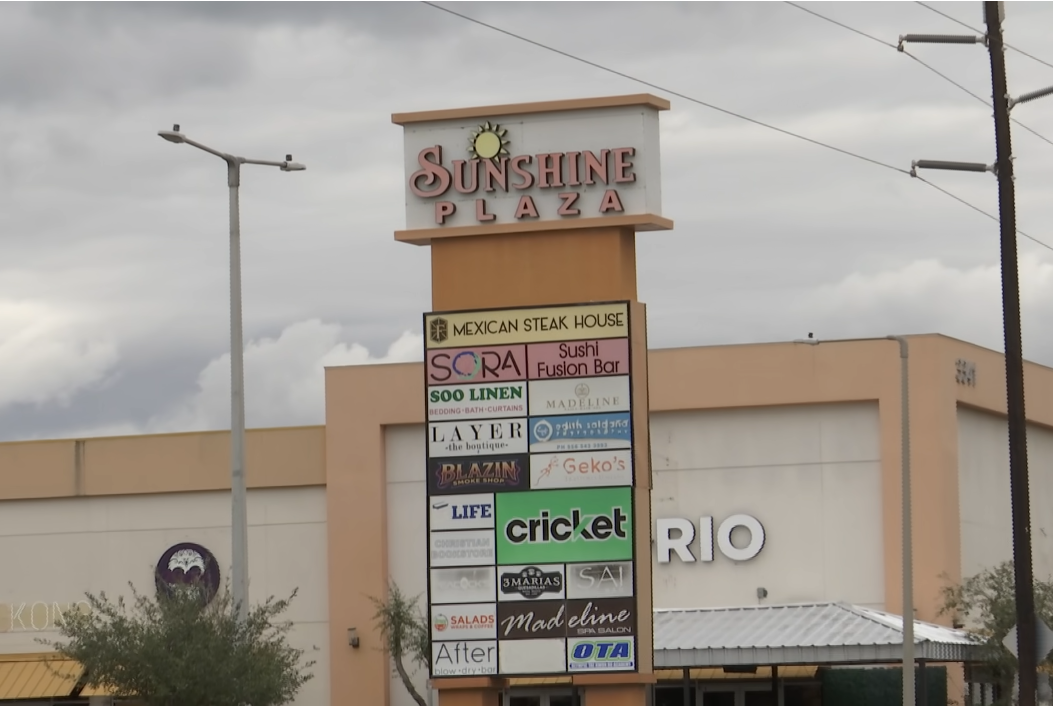
On June 24, Brownsville officials placed closure notices on the doors of several bars along Pablo Kisel Boulevard and revoked the certificates of occupancy that allowed the businesses to operate. The notices directed the buildings to be vacated because of alleged code violations. Within days, property owners and bar operators went to court, arguing that the city had failed to identify the specific offense committed by each business, as detailed in KRGV’s coverage of the shutdown and lawsuit.
A judge allowed the businesses to reopen. The court order has since been extended through July 22, when the next hearing is scheduled, according to MyRGV’s report on the temporary court order. The bars remain open for now, but the temporary order settles none of the central questions. It does not establish that the businesses complied with the law, and it does not determine that Brownsville acted unlawfully.
The dispute has instead exposed two separate problems that City Hall has repeatedly blended together. The first is the documented public safety burden surrounding Brownsville’s most concentrated nightlife corridor. The second is whether the city used a lawful, consistent and sufficiently transparent process when it punished individual businesses.
Brownsville has released considerable information about the first problem. It has released far less about the second.
The City Built Its Case in Public
The confrontation began months before the closure notices appeared.
Brownsville officials entered 2026 facing repeated fights, disturbances and violent incidents around bars concentrated in commercial plazas along Pablo Kisel Boulevard. Three men were hospitalized after a stabbing in the 3300 block on Dec. 15, 2025, one of the incidents cited in KRGV’s early coverage of the proposed entertainment district.
City Attorney Will Treviño presented commissioners with videos taken from social media showing fights outside businesses. He also displayed city figures showing a sharp rise in police calls. Calls associated with the area identified as Shot Republic Plaza increased from 49 in 2022 to 200 in 2025, while calls associated with Sunshine Plaza increased from 11 to 192, as detailed in coverage of the commission’s January deliberations.
The Brownsville Police Department was spending an average of about $2,800 a week on additional coverage in the corridor, city officials said. One weekend generated approximately $5,700 in overtime expenses.
Those numbers created a powerful case for intervention. A commercial district producing hundreds of calls, repeated fights and substantial police overtime imposes costs far beyond the businesses operating there. Officers assigned to one crowded nightlife corridor are unavailable for calls elsewhere. Nearby restaurants, hotels, employees and motorists also bear the consequences when parking lots become gathering places for intoxicated crowds after closing time.
On Jan. 20, the City Commission unanimously approved the Midtown Entertainment District. The city’s official summary of the final vote said the district covered part of Pablo Kisel Boulevard and connecting streets where more than a dozen bars had experienced a rise in late night disturbances.
The ordinance required electronic identification verification, stronger lighting, surveillance systems, restrictions on open containers in parking areas and licensed security under specified circumstances. The city’s summary of the first reading said employees could not drink while working, surveillance recordings had to be retained for at least 14 days and businesses would be required to maintain one licensed security officer for every 75 occupants under the version then being considered.
The city later extended similar rules into the Downtown and Central entertainment districts. The February expansion approved by commissioners created a broader framework covering lighting, cameras, electronic age verification, state alcohol rules and penalties for violations.
The expansion also weakened one early criticism of the policy. Brownsville was no longer imposing special operating rules only on Pablo Kisel businesses while allowing bars elsewhere to operate under a different standard.
Commissioner Tino Villarreal said concentrating the rules in Midtown could encourage irresponsible operators to move to another part of Brownsville. Daniel Alvarado, the owner of The Kraken Lounge downtown, told KRGV during the citywide expansion that his business already followed many of the required practices and that stronger standards could make customers feel safer.
The bar community was never uniformly opposed to regulation. The deeper argument concerned whether Brownsville would distinguish responsible operators from businesses that repeatedly violated the rules.
An Early Warning About Collective Blame
An Early Warning About Collective Blame
Before the ordinance received final approval, Brewskies Pub and Eatery co owner Joel Ruiz Jr. objected to the entire plaza being described as dangerous. He did not deny that problems existed. He argued that the city should conduct targeted inspections and impose stronger consequences on the establishments actually caught breaking the rules, telling KRGV that he had asked police to conduct random checks and supported higher fines.
His concern became more significant after the June closures.
A city may use districtwide evidence to justify districtwide safety regulations. Closing a particular business requires a more individualized determination. The number of police calls surrounding a plaza does not establish that every bar within the plaza violated the same rule or contributed equally to the disorder.
Some calls could originate inside a business. Others could involve a parking lot, roadway or neighboring establishment. A bar employee might call police to remove a violent customer, report narcotics or request assistance with an intoxicated person. Treating every request for police assistance as evidence against the business that made the call could discourage responsible operators from contacting law enforcement.
Brownsville has not publicly released a detailed breakdown showing how the reported calls were distributed among businesses, what conduct generated them or how many were initiated by the bars themselves. After the closures, KRGV asked the city to identify what each business was accused of individually and reported that it was still waiting for an answer.
That missing detail sits at the center of the dispute.
The City’s Allegations Are Serious but Remain Collective
At a June 30 news conference, District 3 Commissioner Gustavo De León named eight bars accused of violating at least one provision of the new rules: Antrito, Hong Kong, Bar Rio, Mala Copa, Clasico, The Jungle, Vida Loca and Mal Verde.
The city’s allegations included serving minors, allowing people with illegal substances such as cocaine inside the establishments, serving alcohol after lawful hours, violating occupancy limits and failing to use required age verification equipment. De León said the closures should not have surprised the businesses and maintained that operators had received three opportunities to comply.
These are not technical accusations. Selling alcohol to minors is an offense under Section 106.03 of the Texas Alcoholic Beverage Code. Alcohol service hours are separately controlled by Chapter 105 of the state code. Overcrowding, inadequate exits and failures involving required security measures can endanger patrons even before a fight or fire occurs.
If Brownsville possesses inspection reports showing that a named bar repeatedly admitted minors, exceeded occupancy limits, ignored scanner requirements or served alcohol after permitted hours, the city could have a strong enforcement case against that establishment.
The public problem is that the city initially presented the alleged violations as a collective list.
After De León’s news conference, KRGV asked what each business had been accused of individually. The station reported that it was still waiting for the city’s answer.
City Attorney Will Treviño acknowledged that some operators felt targeted. He said other businesses had also been found with violations, but that those problems did not rise to the level attributed to the bars selected for closure. That may be true, but the comparison cannot be evaluated without the underlying records.
Brownsville has not publicly produced a complete enforcement table identifying every inspected establishment, the provisions examined, the violations found, the warnings delivered, the corrective action offered and the reason some businesses remained open while others lost their certificates of occupancy.
Without those records, residents are being asked to accept City Hall’s conclusion without seeing the evidentiary path that produced it.
The Owners Say the Closures Came Without Clear Warning
The business owners have offered a sharply different account.
Bar Rio owner Jurnee Robles told KRGV after the shutdown that the owners had not received prior warnings or citation notices informing them that they were violating the rules. She described the bar as her livelihood and raised concerns about bartenders, cleaners and other employees who immediately lost work when the doors were closed.
The lawsuit filed by the property owners argues that the revocation notices did not clearly explain the violations supporting the closures. The temporary restraining order prevented Brownsville from enforcing the certificate revocations at 3231 and 3341 Pablo Kisel Boulevard while the case proceeded.
The city said owners could appeal the revocations and apply for new certificates of occupancy. Officials also said they were willing to help businesses satisfy building, zoning and entertainment district requirements.
The factual conflict is direct. De León said the businesses received three opportunities to comply. The owners said they received no prior warning that they faced closure. Both statements could contain part of the truth if the city held general meetings or inspections but did not deliver a specific written warning to every operator. The correspondence, inspection reports and violation notices would resolve much of the disagreement, but those materials have not been made broadly available.
The enforcement method also matters. A fine allows a business to continue operating while challenging the allegation. Revoking a certificate of occupancy stops the use of the premises, cuts off revenue and places employees out of work. The severity of that consequence makes precise notice more important.
Brownsville Cannot Agree on Whether It Closed Seven Bars or Eight
The public record contains a basic discrepancy that City Hall should resolve.
Brownsville originally said seven businesses were ordered closed. De León later named eight. MyRGV’s June 30 account also identified eight businesses, including Mala Copa.
By contrast, KRGV’s coverage of the extended court order identifies seven bars: Antrito, Hong Kong, Bar Rio, Clasico, The Jungle, Vida Loca and Mal Verde. Mala Copa is absent from that list.
MyRGV’s July 10 report continued to describe eight bars as protected by the order, while KRGV continued to report seven.
The discrepancy could result from differences among the businesses, property owners and plaintiffs involved in the litigation. It could also reflect a change in enforcement status. The available public reporting does not supply a clear explanation.
The number matters because the city is exercising one of its most disruptive regulatory powers. Residents should not have to assemble competing news reports to determine how many businesses their government closed.
The Political Power Runs Through Several Offices
The City Commission created the entertainment district and authorized the regulatory framework. City administrators and inspectors enforced it. The city attorney has defended the government’s position. De León, whose district includes Pablo Kisel Boulevard, became the most visible public advocate for the closures.
Mayor John Cowen Jr. and city officials later presented a broader set of public safety figures covering Jan. 1, 2025, through June 24, 2026. The city said police handled more than 576 calls and incidents during evening hours, made 158 arrests and spent approximately $25,000 a month responding to the district. Those figures were repeated in KRGV’s coverage of the city’s enforcement campaign.
The figures demonstrate a significant public burden, but they do not establish the liability of every named bar. The city has not publicly shown how many of the 158 arrests occurred inside each establishment, how many occurred in shared parking areas or how many involved conduct unrelated to an operator’s compliance with the ordinance.
The distinction has become the central power struggle. City officials are defending their authority to respond to an area that repeatedly consumes police resources. The owners are challenging the way that authority was used against specific properties.
An Appointed Board Now Sits Between the Businesses and City Hall
De León said the businesses had 15 days to submit appeals through the city’s Board of Adjustment and planning department. As of June 30, he said The Jungle was the only named bar that had filed an appeal.
The Board of Adjustment is appointed by the same City Commission that approved the entertainment district ordinance. The city’s official board roster lists seven regular members: Dillon E. Vanderford Jr., Hector Guerra, Larry Hollmann, Gilbert Hernandez, Jose Trevino, Emanhuhel Hernandez and Alejandro Moreno.
The four alternates are Ruben Martinez, Jesus Flores, Jeff Ray and Gilbert Rodriguez. Members serve two year terms, may serve an unlimited number of terms and are required to file personal financial statements under the city’s ethics rules.
The same eleven people are also listed on Brownsville’s Building and Standards Commission, which reviews proposed condemnations of vacant buildings. The overlap does not prove wrongdoing. Cities often use the same appointed residents on related land use bodies, particularly when qualified volunteers are limited.
The structure still deserves attention because the Board of Adjustment is expected to review decisions made under a regulatory system created by the officials who appoint its members. That arrangement places a greater burden on the board to demonstrate independence through open hearings, complete records, clear findings and public recusals when a member has a relevant relationship.
No document reviewed for this article established that any listed board member has a financial interest in the affected bars or a personal stake in the closures. Claims of corruption or a private conflict would require evidence from financial statements, property records, business filings, campaign records or direct relationships. Public suspicion cannot substitute for those records.
The city should nevertheless publish the evidence presented in each appeal, the identity of participating members, any recusals and the written basis for each decision. An appeal process cannot inspire confidence when the operator and the public remain unsure what evidence produced the original punishment.
The Legal Question Is Narrower Than the Political Argument
Brownsville plainly has authority to enforce zoning, occupancy, fire, building and public safety rules. A state alcohol permit does not give a business the right to occupy a building in violation of local safety requirements.
The harder question concerns the procedure used to revoke the certificates.
Because the city directed businesses to its Board of Adjustment, Section 211.010 of the Texas Local Government Codemay become relevant to the dispute. The statute generally permits an aggrieved party to appeal an administrative zoning decision and requires the official to transmit the record supporting the action to the board.
The statute also generally provides that an appeal stays further proceedings unless the responsible official certifies in writing that a delay would create an imminent peril to life or property. In that circumstance, a board or court may decide whether to restrain enforcement.
Whether Section 211.010 controls these particular certificate revocations will depend on Brownsville’s ordinance, the legal classification of the decisions and the arguments presented in court. The city’s public statement that owners had 15 days to appeal should also be reconciled with the 20 day appeal period contained in Section 211.010 if that statute governs the process.
The accessible reporting has not established whether Brownsville issued a written imminent peril certification for each property. If such certifications exist, they could explain why the city proceeded with immediate closures despite an available administrative appeal. If they do not exist and the state stay provision applies, the owners could have an additional procedural argument.
Those are issues for the court to determine from the actual ordinance, notices, certifications and administrative record. They cannot be resolved from press conferences alone.
The Restraining Order Is a Pause, Not a Verdict
The original temporary restraining order was signed June 25. It allowed the businesses to reopen while their challenge moved forward. After a visiting judge withdrew from the case, another judge extended the order through July 22, as detailed in KRGV’s account of the court proceedings.
Under Texas Rule of Civil Procedure 680, a temporary restraining order is designed to prevent immediate and irreparable injury before the court can conduct a fuller hearing. Such orders ordinarily expire within 14 days unless extended for good cause or with the consent permitted by the rule.
The order does not clear the bars of the city’s allegations. It also does not confirm that Brownsville’s notices or enforcement process were lawful. It preserves operations while the judge considers whether stronger temporary relief should be granted or whether the city may resume enforcement.
At the next hearing, the owners will need evidence supporting their contention that the city acted without sufficient notice or legal process. Brownsville will need the records behind its accusations, including inspection findings, notices, communications, violation histories and the authority used to revoke each certificate.
The case will become much easier to evaluate once both sides move from public statements to sworn evidence.
Facebook Filled the Space Left by Missing Records
The information gap quickly produced competing narratives across Brownsville social media.
City officials and local news pages circulated the figures involving 576 incidents, 158 arrests and the monthly cost of police coverage. Other local pages focused on the owners’ claim that businesses were closed without adequate warning. A Conociendo Brownsville post promoting De León’s response framed the commissioner as pushing back against criticism over the closures.
A separate Facebook video labeled “Selective Enforcement” asked whether commissioners were eliminating competition for certain bar owners. That accusation is politically explosive, but no document found in the reviewed public record substantiates it. There is no verified ownership filing, financial record, inspection comparison or official communication establishing that a commissioner used the ordinance to benefit a favored competitor.
The absence of proof does not prevent residents from asking why certain businesses were closed while others with violations remained open. It means the answer must come from comparative enforcement records rather than speculation about private motives.
Facebook posts and comment sections are also not reliable measures of community opinion. They reveal the intensity of the argument and the suspicions surrounding City Hall, but they cannot establish how most Brownsville residents view the closures.
The online dispute reflects a deeper local problem. When government releases broad accusations without the underlying business specific evidence, residents fill the gaps with political loyalties, personal experiences and rumors. Greater transparency would not end disagreement, but it would narrow the range of claims that can survive without proof.
What Brownsville Has Still Not Shown
The city has explained why Pablo Kisel Boulevard required attention. Its crime figures, videos, police costs and reported violations support stricter oversight of the area.
It has not publicly shown enough to explain every closure.
A complete record would identify the inspection date for each business, the inspector involved, the ordinance section examined, the evidence of each violation, the warning delivered, the time allowed for correction and the reason revocation was selected instead of a fine or lesser penalty.
The city should also separate police calls generated by each business from calls involving shared parking lots, nearby roads and unrelated establishments. Calls placed by bar employees seeking police assistance should be identified rather than automatically treated as evidence against the caller.
Brownsville should release any written imminent peril certifications, explain the difference between the reported seven and eight affected bars and clarify whether the businesses were closed under the same legal authority or through separate code provisions.
The owners have obligations as well. Businesses claiming that they passed inspections should release the inspection reports. Operators who received emails, meeting notices or corrective instructions should publish them. Any owner disputing an occupancy, scanner or security allegation should provide the records demonstrating compliance.
Transparency cannot operate in only one direction.
A Test of Whether Brownsville Can Govern Precisely
The city’s underlying public safety concern is credible. Hundreds of police calls, repeated fights, arrests, substantial overtime costs and allegations involving minors or illegal drugs cannot be dismissed as hostility toward nightlife or small business.
The enforcement process must still connect each punishment to evidence against the business receiving it. Collective statistics can justify a districtwide ordinance, but those statistics alone cannot prove that every establishment committed a violation serious enough to lose its certificate of occupancy.
Brownsville may ultimately demonstrate that every targeted operator repeatedly ignored lawful requirements. The owners may establish that the city relied on vague notices, inconsistent deadlines or inadequate procedures. The evidence could also reveal a combination of legitimate violations and defective enforcement.
The July 22 hearing will not resolve every problem surrounding Pablo Kisel Boulevard. It should begin answering the question that City Hall has left open since June 24: what exactly did each business do, what warning did it receive and what legal authority allowed Brownsville to close it immediately?
Public safety gives the city a reason to act. A transparent record gives the public a reason to trust that action.