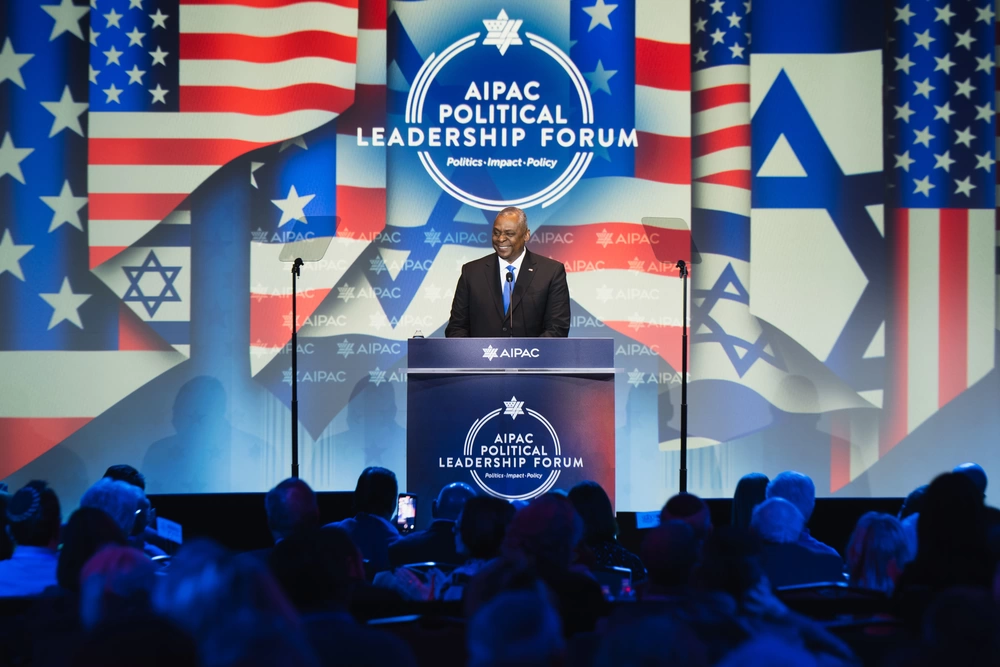
AIPAC has existed in Washington for decades, but its direct campaign-spending operation is new. Since 2022, the pro-Israel lobby and allied donors have poured millions into Democratic and Republican primaries, reshaping races from New York to Maryland, Michigan, Missouri, Illinois and Kentucky.
For decades, the American Israel Public Affairs Committee was known less for campaign attack ads than for access.
Its power in Washington came through lobbying, donor networks, annual policy conferences, congressional relationships and a long bipartisan consensus that strong support for Israel was one of the safer positions in American politics. Candidates in both parties knew AIPAC. Members of Congress knew AIPAC. Presidents, party leaders and major donors knew AIPAC.
But in the last several election cycles, that older model has changed.
Since late 2021, AIPAC and its allied political operation have entered congressional primaries with a level of direct spending that has made the group one of the most consequential outside forces in American House elections. Through AIPAC PAC, individual donors can give directly to pro-Israel candidates. Through United Democracy Project, an AIPAC-backed super PAC, donors can finance unlimited independent expenditures for or against candidates, so long as the spending is not coordinated with campaigns.
The result has been a new kind of primary fight. Candidates who criticize Israeli policy, support conditioning U.S. military aid, call for a cease-fire in Gaza, or align with the progressive wing of the Democratic Party have found themselves facing millions of dollars in outside advertising. In some races, the ads have focused on Israel. In many others, they have attacked candidates on unrelated issues such as taxes, public safety, infrastructure votes, ethics investigations or local competence.
AIPAC says its goal is straightforward: to elect members of Congress who support the U.S.-Israel relationship and to defeat candidates it views as hostile to that relationship. On AIPAC’s own politics page, the organization says its members are “leading the political fight to keep Congress pro-Israel,” helping pro-Israel candidates win elections and helping defeat “detractors of the U.S.-Israel relationship.”
Critics see something more troubling. They argue that AIPAC and other pro-Israel donors have used enormous sums of outside money, including money from Republican-aligned donors, to influence Democratic primaries in safe Democratic districts where the winner is often effectively chosen before November.
The factual record shows both things: AIPAC is legally participating in American elections through U.S.-registered political committees, and its spending has become large enough to alter the strategic reality of congressional primaries.
What AIPAC Is
AIPAC stands for the American Israel Public Affairs Committee. The organization describes itself as an American membership group whose mission is to strengthen the U.S.-Israel partnership. On its about page, AIPAC says its members and donors are Americans and that the organization is neither directed nor funded by the Israeli government.
That distinction matters. AIPAC is not formally a foreign government. It is an American lobbying organization and political network that advocates for a strong U.S.-Israel relationship. Its critics often describe it as the “Israel lobby,” but the legal reality is more specific: AIPAC and its political committees operate inside the American campaign-finance system, file reports with the Federal Election Commission, and disclose donors and expenditures under federal law.
AIPAC’s modern electoral language is direct. Its politics page says AIPAC members support Democratic and Republican candidates who strengthen the U.S.-Israel relationship. It also says United Democracy Project, the AIPAC-backed super PAC, works to defeat “detractors — both Republicans and Democrats — of the U.S.-Israel relationship.”
That statement captures the central change. AIPAC is no longer only lobbying lawmakers after they arrive in Washington. It is helping decide which candidates get there.
From Washington Lobby to Campaign Powerhouse
AIPAC’s roots go back to the early Cold War period. Historian Doug Rossinow, writing in Modern American History, traces the origins of the Israel lobby to the years after Israel’s founding, with the American Zionist Committee for Public Affairs operating by the early 1950s before AIPAC later took its present name. Rossinow’s study of the origins of the Israel lobby from 1949 to 1954 places AIPAC’s development inside the broader politics of the Cold War, American Jewish organizing and U.S. policy toward the Middle East.
For most of its history, AIPAC did not operate like a modern campaign super PAC. Its strength came through organizing supporters, briefing lawmakers, building relationships across both parties and signaling to donors which candidates were considered reliable on Israel. It did not itself directly contribute to federal candidates for most of its existence.
That changed ahead of the 2022 midterms.
The Federal Election Commission profile for AIPAC PAC shows that the committee registered on Dec. 15, 2021. The FEC profile for United Democracy Project shows that the super PAC registered on Jan. 3, 2022.
The distinction between the two matters. A traditional PAC can donate directly to candidates, but only within contribution limits. A super PAC cannot give directly to candidates, but it can raise and spend unlimited sums on independent advertising, mail, digital messaging and other election activity. The FEC explains that independent expenditures are communications that expressly advocate the election or defeat of a clearly identified candidate and are not coordinated with a campaign.
That legal structure allowed AIPAC’s electoral arm to become a major outside spender without formally giving unlimited money to campaigns.
The 2022 Breakout
The 2022 midterms were the first full test of AIPAC’s new direct-spending strategy.
In July 2022, POLITICO reported that AIPAC’s super PAC had become the top spender in Democratic primaries that year. According to the report, spending through United Democracy Project had topped $22 million across nine safe-seat Democratic primaries by late July.
The most striking feature of the strategy was where the money went. AIPAC did not primarily focus on competitive general elections. It spent heavily in Democratic primaries, often in districts so blue that the primary winner was highly likely to win the general election.
In Maryland’s 4th Congressional District, former Rep. Donna Edwards tried to return to Congress. United Democracy Project spent heavily against Edwards and in support of Glenn Ivey, a former Prince George’s County state’s attorney. The Guardian reported that UDP spent $4.2 million against Edwards and $1.7 million supporting Ivey. Ivey won the primary.
In Michigan’s 11th Congressional District, redistricting forced two Democratic incumbents, Haley Stevens and Andy Levin, into the same primary. Levin, a Jewish congressman from a prominent Michigan political family, had criticized Israeli settlement policy and authored legislation meant to make a two-state solution official U.S. policy. POLITICO reported that the race became one of AIPAC’s most personal and expensive 2022 investments. Stevens won.
In Pennsylvania’s 12th Congressional District, United Democracy Project spent millions against Summer Lee, a progressive state legislator backed by Sen. Bernie Sanders and other left-wing groups. Lee survived the primary anyway and later won the House seat. The result showed the limits of outside money: it could change the race, but it could not guarantee the outcome.
The pattern from 2022 was clear. AIPAC’s electoral operation could win races. It could also lose. But even when it lost, it could force candidates to spend time, money and political capital answering attacks from a national donor network.
The Ads Often Do Not Mention Israel
One of the most important facts about AIPAC’s electoral strategy is that its ads often do not center Israel.
That is not unusual in American politics. Outside groups often use the message they believe will move voters, not necessarily the issue that motivates the donor. A climate group may attack a candidate on corruption. A business group may attack a candidate on crime. A pro-Israel group may attack a candidate on taxes, infrastructure or ethics.
But the practice has become controversial because voters may not know why the spending is happening.
In May 2024, POLITICO reported that AIPAC’s super PAC was spending in congressional races while largely avoiding Israel as the subject of its campaign ads. In Democratic primaries, the group’s ads often focused on domestic themes — infrastructure, gun violence, public safety, abortion rights, taxes or whether a candidate was aligned with President Biden.
That strategy can be effective because many primary voters are not following foreign-policy debates closely. A voter may see an ad about crime or taxes without realizing the spender is primarily motivated by U.S. policy toward Israel.
AIPAC’s defenders argue that the ads are legal, disclosed and focused on issues voters care about. Critics respond that the issue driving the spending should be clearer to voters before Election Day.
The 2024 War Chest
The spending became even more visible in 2024, after Hamas’ Oct. 7, 2023, attack on Israel and Israel’s war in Gaza transformed Democratic politics.
In March 2024, POLITICO reported that AIPAC was preparing a $100 million political effort across its entities to support pro-Israel candidates and defeat critics. Progressive groups responded by launching anti-AIPAC campaigns and urging Democratic candidates to reject support from the group.
The 2024 cycle brought two of the most high-profile examples: Rep. Jamaal Bowman in New York and Rep. Cori Bush in Missouri.
Bowman, a member of the progressive “Squad,” had become one of the most outspoken critics of Israel in Congress. He faced Westchester County Executive George Latimer in New York’s 16th Congressional District. The race became the most expensive House primary in American history at the time. AdImpact reported that total ad spending in the Bowman-Latimer primary reached $24.8 million, with 60 percent of the spending coming from United Democracy Project.
FactCheck.org reported that UDP spent nearly $9.9 million opposing Bowman and nearly $4.8 million supporting Latimer. Latimer defeated Bowman.
In Missouri’s 1st Congressional District, Cori Bush faced St. Louis County prosecutor Wesley Bell. Bush had also been sharply critical of Israel’s military campaign in Gaza. Axios reported that UDP spent nearly $9 million on ads supporting Bell and attacking Bush. Bell defeated Bush, making Bush the second member of the Squad to lose a primary that cycle after Bowman.
Those races sent a message through Democratic politics: criticism of Israel could now come with a multimillion-dollar primary challenge, especially in safe Democratic seats.
AIPAC Also Loses
A factual account has to include the races where AIPAC and its allies did not get what they wanted.
Summer Lee survived in Pennsylvania in 2022. Dave Min advanced in California in 2024 despite UDP spending against him. The Guardian reported that UDP poured $4.6 million into negative advertising against Min, who still advanced to the general election.
These losses matter because they complicate the popular idea that AIPAC can simply “buy” any race it enters. Money matters, but candidate quality, local issues, endorsements, turnout, district identity and the national political climate still matter too.
AIPAC’s money is powerful because it can dominate the paid-media environment. It is not all-powerful because voters still make the final decision.
The Donor Question
A major controversy around AIPAC’s spending is not simply that the group spends money. Many interest groups do. The controversy is who funds the spending and which primaries they target.
FactCheck.org reported that United Democracy Project’s major 2024 donors included Jan Koum, the co-founder of WhatsApp; financier Jonathon Jacobson; GreenSky co-founder David Zalik; and Home Depot co-founder Bernard Marcus. POLITICO reported in 2022 that major contributors to UDP included GOP megadonors such as Paul Singer and Bernie Marcus, along with Democratic donors such as Haim Saban.
This has fueled one of the sharpest Democratic complaints: that Republican-aligned donors are helping shape Democratic primaries.
AIPAC’s answer is that support for Israel has historically been bipartisan and that pro-Israel candidates exist in both parties. On its own politics page, AIPAC says it supports pro-Israel Democrats and Republicans.
The factual tension is this: AIPAC’s stated mission is bipartisan, but much of the most controversial spending has taken place inside Democratic primaries. That gives the group influence not only over U.S.-Israel policy, but over the internal direction of the Democratic Party.
Democratic Voters Are Shifting
AIPAC’s direct-spending era has arrived at the same time Democratic voters have become more divided over Israel and Palestine.
In 2023, Gallup found that Democrats sympathized more with Palestinians than Israelis for the first time in its polling trend, 49 percent to 38 percent. In 2024, Pew Research Center found that a plurality of Democrats opposed providing Israel with military aid for the war against Hamas.
By 2026, Gallup reported that American sympathies in the Middle East had narrowed significantly, with younger Americans and Democrats moving further away from Israel than older voters and Republicans.
Those polling shifts help explain why AIPAC’s primary spending has become so contentious. AIPAC is trying to preserve a bipartisan pro-Israel majority in Congress at a moment when one party’s voters are increasingly skeptical of unconditional U.S. support for Israel.
The Rise of the Anti-AIPAC Countermovement
AIPAC’s more aggressive posture has produced an organized response.
In 2024, progressive groups launched campaigns to counter AIPAC’s influence. POLITICO reported that progressive Democrats were trying to turn AIPAC’s spending threat into a fundraising and organizing tool. The argument was simple: if AIPAC was going to spend millions against progressives, progressives would use that threat to raise small-dollar money and energize their base.
Groups such as Justice Democrats, Working Families Party, Our Revolution and Jewish Voice for Peace Action have all been part of the broader anti-AIPAC push. Their argument is that AIPAC’s spending narrows debate, punishes criticism of the Israeli government and allows wealthy donors to overwhelm local primaries.
AIPAC’s counterargument is that anti-Israel candidates are trying to weaken a vital U.S. alliance and that pro-Israel voters have every right to organize and spend in elections.
That debate is now one of the defining fights inside the Democratic Party.
2026: The Spending Expands
The 2026 cycle shows that AIPAC and pro-Israel donors are not retreating.
In June 2026, POLITICO reported that AIPAC was on track for a record spending cycle and that its role had become a major issue in New York and Maryland primaries.
In Maryland’s 5th Congressional District, where longtime Rep. Steny Hoyer retired, outside spending became one of the central issues in the Democratic primary. Roll Call reported that candidates criticized millions in outside spending from crypto and AIPAC-linked groups. State Del. Adrian Boafo, a former Hoyer staffer, benefited from major outside support. The Associated Press reported that Boafo won the Democratic primary, aided by support from tech interests and AIPAC’s super PAC.
In New York’s 13th Congressional District, Rep. Adriano Espaillat faced Darializa Avila Chevalier, a progressive challenger. City & State New York reported that super PAC spending became a major issue in the race. CBS News reported that Chevalier defeated Espaillat in a major upset.
The New York result showed the political risk for AIPAC-backed candidates in some Democratic districts. Outside support that once signaled establishment strength can now become a liability, especially in districts where progressive voters view AIPAC as too closely tied to Israeli policy or Republican donor networks.
AIPAC’s spending has also moved into Republican primaries. The group has made clear that it opposes “detractors” in both parties. That means the Democratic primaries get the most attention because the divide over Israel is sharper there, but the strategy is not limited to Democrats.
Why Primaries Matter More Than General Elections
AIPAC’s primary strategy is powerful because many congressional districts are not competitive in November.
In deep-blue districts, the Democratic primary often decides who goes to Congress. In deep-red districts, the Republican primary can play the same role. Outside groups do not always need to persuade a majority of general-election voters. They need to influence a smaller primary electorate, often in low-turnout races where a few million dollars in television, digital and mail spending can dominate the information environment.
This is not unique to AIPAC. Labor unions, crypto PACs, business groups, environmental groups, gun-rights groups and ideological organizations all use primaries to shape Congress. But AIPAC’s spending stands out because it has become unusually large in House primaries and because the issue motivating the spending — Israel policy — may not be the central issue in the ads voters see.
AIPAC’s Defense
A fair account has to include AIPAC’s defense.
AIPAC says it is an American organization funded by Americans. It says it is not funded or directed by the Israeli government. It says voters decide elections, and that AIPAC merely helps pro-Israel candidates communicate with voters. The organization states on its website that it works to strengthen the relationship between the United States and Israel.
AIPAC also argues that the U.S.-Israel relationship is a legitimate American policy issue. Congress votes on military aid, weapons sales, sanctions, diplomatic support, foreign-policy resolutions and oversight of the executive branch. If environmental groups can spend to elect climate hawks, and labor groups can spend to elect union allies, AIPAC argues that pro-Israel Americans can spend to elect candidates who support Israel.
There is force to that argument. The First Amendment protects political advocacy, including advocacy on foreign policy. There is nothing inherently illegal about Americans organizing around support for Israel, Palestine, Ukraine, Taiwan, NATO, immigration, trade or any other international issue.
The harder question is democratic, not merely legal: how much outside money should be able to shape local representation, especially when the spending is concentrated in primaries where turnout is low and disclosure may arrive too late for ordinary voters to process.
The Critics’ Case
Critics make three main arguments.
First, they argue that AIPAC’s spending suppresses debate by threatening lawmakers with expensive primaries if they criticize Israeli policy. Candidates may avoid speaking about Gaza, settlements, civilian casualties or conditioning aid because they do not want to attract millions in outside attacks.
Second, critics argue that AIPAC’s funding often comes from donors whose broader politics are out of step with Democratic primary voters. The presence of Republican megadonors in Democratic primaries has become a central attack line from progressives, especially after POLITICO reported that some of United Democracy Project’s biggest contributors included major Republican donors.
Third, critics argue that ads funded by pro-Israel groups often avoid the actual issue. Instead of asking voters to choose between two visions of U.S.-Israel policy, the ads may attack a candidate on local issues, leaving voters without a clear understanding of why the group is spending.
Those criticisms do not prove corruption. They do describe a transparency problem. Voters can only evaluate political spending properly if they understand who is spending, what the spender wants and how the spending connects to the office being contested.
The Broader Campaign-Finance Problem
The AIPAC story is also part of a much larger American campaign-finance story.
Super PACs exist because federal courts and campaign-finance rules allow unlimited independent spending on elections so long as that spending is not coordinated with candidates. The FEC explains that independent expenditurescan expressly advocate for the election or defeat of federal candidates, but they must be reported and cannot be coordinated with campaigns.
That system has created a political environment where outside organizations can dominate primaries. AIPAC is one of the most visible examples because Israel has become a dividing issue inside the Democratic Party. But the same basic machinery is used by crypto groups, billionaire-funded ideological PACs, corporate-aligned committees, unions and activist organizations across the political spectrum.
In Maryland’s 5th District in 2026, for example, AIPAC-linked spending was only one part of the outside-money story. Roll Call reported that crypto-backed spending was also a major issue in the race.
The point is not that AIPAC is the only group using the system. The point is that AIPAC has become one of the clearest examples of how a focused national donor network can intervene in district-level candidate selection.
What the Record Shows
The factual record supports several conclusions.
AIPAC has existed in some form since the 1950s, but its direct campaign-spending era is recent. It began in late 2021 with the creation of AIPAC PAC and United Democracy Project.
The group has become especially active in Democratic primaries, where it has supported candidates it views as pro-Israel and opposed candidates it views as hostile to the U.S.-Israel relationship.
Its spending has helped defeat several major progressive critics of Israel, including Andy Levin, Donna Edwards, Jamaal Bowman and Cori Bush. It has also failed in some races, including Summer Lee’s 2022 primary and Dave Min’s 2024 California primary.
The ads funded by AIPAC’s super PAC and allied groups often do not mention Israel, even when Israel policy appears to be the central reason for the spending.
AIPAC says it is defending a vital U.S. alliance and supporting candidates from both parties. Its critics say it is using massive outside spending to discipline Congress and narrow debate over Israel and Palestine.
Both sides are now operating in a changed political climate. Democratic voters are more divided over Israel than they were a generation ago. The Gaza war has accelerated that shift. Candidates who once might have feared opposing AIPAC now sometimes raise money by attacking it. At the same time, candidates in many districts still benefit from AIPAC-linked support and win.
The Real Question for Voters
The question is not whether AIPAC has a right to participate in American politics. Under current law, it does.
The question is whether voters understand the machinery shaping their primaries.
When a voter in Maryland, New York, Missouri, Michigan, Illinois, Kentucky or Texas sees a flood of ads, the message may be local. The money may be national. The motive may be foreign policy. The candidate may win or lose before most general-election voters ever pay attention.
That is the modern primary system. AIPAC did not create it. But AIPAC has learned how to use it.
And as long as safe districts, low-turnout primaries, unlimited independent spending and delayed disclosure remain central features of American elections, groups with disciplined donors and a narrow policy mission will continue to exercise power far beyond the size of the electorate that actually sees their ads.