Government reports do not launch wars. They can define an enemy, compress decades of history into a usable narrative and narrow the policies that appear legitimate. That is the importance of the State Department’s new 100-page Cuba report, which portrays Havana not merely as an exhausted dictatorship but as a durable hostile enterprise that has repressed its people, penetrated American institutions, cultivated political movements and supported revolutionary violence.
The timing gives the document greater significance than its historical material alone. It arrived after the Trump administration declared Cuba an unusual and extraordinary threat, threatened countries supplying it with oil, expanded sanctions across strategic sectors, indicted former Cuban leader Raúl Castro and formally revived the Monroe Doctrine. It also appeared while senior Pentagon officials were examining possible military missions involving Cuba. The evidence does not establish that President Donald Trump has ordered an invasion. It does show that regime change, enforced regional alignment and military contingency planning now occupy the same policy framework.
A Historical Indictment Written for a Present Crisis
The report’s publicly quoted passages organize the case around internal repression, long-term espionage, support for militant left-wing organizations, cultivation of sympathetic activists and cooperation with American adversaries. A contemporaneous Agence France-Presse account quoted the document accusing Cuba of reaching the highest levels of the American government and backing an extraordinary period of left-wing terrorism. It also noted that the report contained little fundamentally new information. That combination is revealing. Its purpose appears less investigative than cumulative: to assemble familiar episodes into one sustained argument that Cuba has remained a continuous threat across generations.
The strongest claim concerns intelligence penetration. Former State Department official, National Security Council staff member and ambassador Victor Manuel Rocha pleaded guilty in 2024 to secretly acting for decades as a Cuban agent and received the statutory maximum sentence of 15 years. That case gives substantial factual support to the report’s argument that Cuban intelligence has pursued patient access to sensitive American institutions.
The broader language about cultivating “generations of American activists” requires more discipline. Cuba undeniably supported leftist militant organizations in Latin America and Africa, a record that contributed to its 1982 designation as a state sponsor of terrorism. The historical U.S.-Cuba record includes armed revolutionary movements, sanctuary relationships and ideological outreach. Yet lawful activism, ideological sympathy, foreign influence and clandestine agency are different categories. A report that collapses them could turn a valid counterintelligence warning into a domestic political weapon.
The Domestic Political Meaning Extends Beyond Cuba
The dossier was released during a broader administration campaign to redefine left-wing political violence as a transnational counterterrorism problem. Days earlier, Rubio convened officials from more than 60 countries to coordinate against what the administration calls radical-left terrorism. The White House said it would deploy financial, diplomatic and immigration tools similar to those used against jihadist networks. The official campaign announcement also said investigators would examine charities, nonprofits, propaganda channels and alleged foreign-influence structures. Cuba’s historical intelligence and revolutionary relationships give the administration a foreign-state anchor for that domestic and international agenda.
That creates a legitimate investigative question and a civil-liberties danger. Foreign funding, operational direction or material support for political violence should be investigated and prosecuted where evidence exists. Political labels cannot substitute for proof. The Associated Press review noted that recent left-wing attacks rose from a low base while far-right violence remained historically more frequent. The Cuba report’s sweeping activist language could therefore become a bridge between foreign counterintelligence and domestic partisan enforcement. Its credibility will depend on whether the government identifies specific organizations, financial transfers and unlawful acts rather than treating radical rhetoric, democratic socialism and Cuban espionage as parts of one undifferentiated conspiracy.
The Case Against the Cuban State Is Strongest on Repression
The report does not need exaggerated claims to establish that Cuba remains authoritarian. The Inter-American Commission on Human Rights has documented the continued absence of free elections and political pluralism, restrictions on political association, arbitrary limits on assembly and expression, and systematic intimidation of people considered opponents of the Communist Party. These findings come from a hemispheric human-rights institution, not the Trump administration, and establish that Cuban citizens lack the ordinary mechanisms through which a population can peacefully remove its rulers.
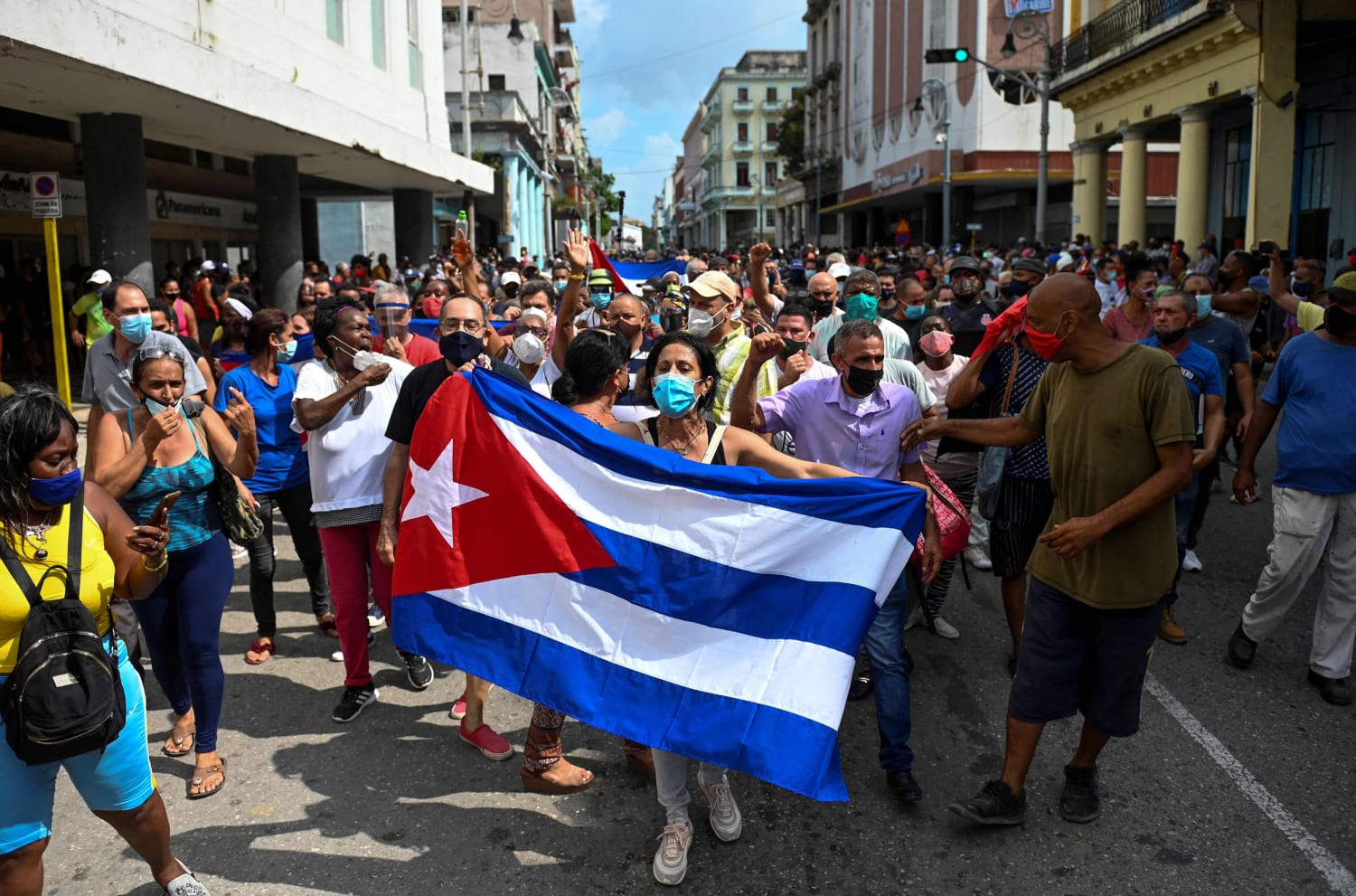
Independent journalists, artists, demonstrators and dissidents face detention, harassment and restrictions on movement. Hundreds of critics remained imprisoned after the July 2021 protests, while shortages and blackouts degraded daily life. Human Rights Watch’s 2026 country review described both sustained repression and the humanitarian consequences of American sanctions. Washington can accurately identify political abuses while still understating the civilian costs of its own pressure campaign. The Cuban government’s authoritarianism is independently documented; the harder question is whether every economic failure and political movement can be fitted into one ideological indictment.
Cuba’s Economic Collapse Has More Than One Cause
Cuba’s centralized system has produced chronic weakness. The Bertelsmann Transformation Index describes an economy dominated by the state and military, slow and inconsistent reform, damaging monetary changes, limited private-sector development and long dependence on external patrons. The government has repeatedly permitted market openings and then restricted them when greater private autonomy threatened political control. That record supports the administration’s argument that the present crisis cannot be explained only by American hostility.
It does not follow that the embargo and newer energy campaign are irrelevant. A 2026 economic reassessment argued that, under different assumptions about trade, the embargo could explain a substantial portion of Cuba’s post-1959 underperformance. Members of Congress visiting Havana in July described blackouts exceeding 20 hours, disrupted transportation and medical shortages; the Associated Press attributed the crisis to both failed domestic policies and escalating American restrictions. The strategic logic in Washington is to make preserving the current system more costly than reform. The risk is that ordinary Cubans absorb the deprivation while the state retains coercive power.
The Pressure Campaign Was Already in Motion
Executive Order 14380 declared Cuba an unusual and extraordinary threat and created a mechanism for additional tariffs on goods from any country that supplies oil to the island. The January order converts access to the American market into leverage over Cuba’s energy lifeline. It also gives Washington a means to discipline third countries, not only Havana.
A second executive order in May expanded blocking authority across Cuba’s energy, defense, mining, financial-services and security sectors. Treasury then warned foreign banks and businesses that transactions with the military-controlled conglomerate GAESA could create sanctions exposure. The OFAC notice shows that the practical objective is to force foreign capital to choose between major Cuban commercial channels and the much larger American economy.
Pressure has been paired with a conditional offer. In May, American officials described humanitarian aid, internet access, agricultural assistance and infrastructure support if Havana released political prisoners, reduced repression and opened more space for private investment. Officials told the Associated Press that military action was not then imminent, while emphasizing that options remained available. The preferred sequence was already visible: intensify pain, present an exit, and reserve force if the leadership refuses.
The New Monroe Doctrine Is Now an Official Strategy
The administration’s hemispheric ambition is written into the 2025 National Security Strategy, which announces a “Trump Corollary to the Monroe Doctrine.” It commits the United States to restoring American preeminence, denying non-hemispheric competitors the ability to position forces or control strategic assets, rewarding governments and political movements aligned with American strategy, expanding access to important locations and reconsidering the American military presence throughout the region. Its formula is “Enlist and Expand.”
That language gives substance to what supporters sometimes call the “Donroe Doctrine.” It is not a declared plan to invade every government that disagrees with Washington. It is a strategy of enforced hierarchy. Friendly governments receive trade, investment, security cooperation and political support. Resistant governments face tariffs, sanctions, isolation and potentially military pressure, especially when they provide space to China, Russia or Iran. Cuba sits at the center because of its location, history, intelligence relationships and symbolic importance to the Latin American left.
Venezuela Changed What an American Intervention Can Look Like
The most important precedent is Venezuela in January 2026. American forces conducted a joint military extraction in Caracas, captured Nicolás Maduro and his wife, and transferred them into American custody to face federal charges. The Pentagon’s official account described an operation involving special operations forces, intelligence agencies, extensive planning and rehearsals. Washington presented it as an effort to bring an indicted leader to justice rather than a conventional invasion or occupation.
A Justice Department opinion concluded that the Maduro operation would not amount to war in the constitutional sense, even though planners anticipated armed resistance and used military forces inside another country. The released legal analysis treated the mission as military support for law enforcement, relied on allegations in Maduro’s indictment and emphasized that no sustained occupation was planned. It gives the executive branch a model for using substantial force while arguing that it has not initiated a war requiring advance congressional authorization.
The May indictment of Raúl Castro and five other Cuban defendants therefore carries significance beyond criminal accountability. The Justice Department charged them over their alleged roles in the 1996 shoot-down of two unarmed Brothers to the Rescue aircraft. An indictment is an accusation, not a conviction, and Castro is not Cuba’s current president. Still, criminal charges plus the Venezuela precedent create a recognizable predicate: identify senior foreign leaders as fugitives accused of killing Americans, then characterize military action as apprehension rather than regime-change war. No public evidence proves that Washington intends to use that model in Cuba, but the resemblance is real.
The Pentagon Planning Makes the Invasion Question Serious
In March, the senior American commander for Latin America gave Congress a direct denial. Asked whether any command was rehearsing the seizure, occupation or control of Cuba, Gen. Francis Donovan said Southern Command was not and that he knew of no other command doing so. The Senate Armed Services Committee transcript is significant because senators invoked the earlier Venezuela denials and the later discovery that rehearsals had been underway. At that point, the public military position focused on protecting the embassy, Guantánamo Bay and responding to mass migration.
By June, the rhetoric had hardened. At Guantánamo Bay, Defense Secretary Pete Hegseth warned Cuba against acquiring weapons capable of reaching the base or American territory and said such a step would invite a confrontation Havana could not withstand. He added that the military would provide the president with every option needed. The Reuters account did not establish that Cuba possessed such a capability. It did establish a possible trigger around which future action could be organized: foreign weapons near the United States.
The decisive change came in July. Multiple officials told CBS News that planners had examined several options, including an Army-led air assault involving thousands of soldiers from the 101st Airborne Division. They stressed that the briefings did not mean Trump or the Pentagon had decided to conduct an operation. Contingency planning is a normal military responsibility. Yet the scale and specificity move the issue beyond rhetorical threats. Washington is studying missions capable of placing a large American force on Cuban territory.
The range of possible operations also matters. A limited raid to seize an indicted person, strikes against weapons or intelligence facilities, an airborne assault to secure selected sites and a prolonged occupation are radically different missions. Each demands more troops, logistics, intelligence and political commitment than the last. Venezuela offered the administration a relatively narrow extraction model. Cuba would present a larger problem because removing leaders would not automatically dissolve the party, security services, armed forces or military-owned economy. Even a rapid tactical success could leave Washington responsible for preventing reprisals, protecting infrastructure, distributing fuel and food, managing migration and deciding which Cuban actors possess legitimate authority. The absence of a credible public transition plan is therefore as important as the existence of an assault option.
The Report Is Part of a Pretext but Not Proof of a Decision
Whether the dossier is a “pretext for invasion” depends on what that means. It is not a legal authorization, operations order, public ultimatum or War Powers notification. It does not establish that the president selected a date or approved a mission. Calling it proof of an inevitable invasion would outrun the evidence.
It can still function as pretext in the broader political sense. Before force is used, a government may identify an enduring enemy, declare an emergency, impose escalating penalties, establish criminal allegations against leaders, define a foreign military threat, declare diplomacy unsuccessful and prepare operational alternatives. The administration has completed or begun each step. The report supplies the historical and ideological narrative binding them together.
Several indicators would show a shift from preparation toward execution: a demand tied to a deadline, unusual evacuation orders, visible force concentration in Florida or the Caribbean, congressional notification, a presidential finding identifying an immediate threat, blockade enforcement or evidence that Cuba accepted foreign strike systems. None is established by the report alone. The most accurate judgment is that invasion risk has risen materially and can no longer be treated as fantasy, while the public record still falls short of proving a decision.
Law and History Place Limits on the Strategy
A full invasion or occupation would present far greater legal difficulty than the Maduro extraction. The War Powers Resolution says the collective judgment of Congress and the president should govern the introduction of forces into hostilities and identifies a declaration of war, statutory authorization or an emergency created by an attack as the recognized bases for action. Presidents have disputed Congress’s restrictive reading, and Venezuela shows how this administration may define a limited operation. A campaign to conquer or administer Cuba would be difficult to describe as a short law-enforcement mission.
History also warns against assuming that force would produce a stable, aligned government. The United States occupied Cuba after the War of 1898 and required the new republic to accept the Platt Amendment, preserving an American right of intervention until 1934. The State Department’s historical record explains why Cuban nationalism has long been inseparable from resistance to American control. Removing Communist leaders could be welcomed by many dissidents while reviving the regime’s strongest nationalist argument.
Washington has traveled this road before. A 1963 policy paper proposed overthrowing the Castro government through increasing political, economic, psychological and military pressure and replacing it with a government compatible with American aims. The declassified memorandum resembles the present sequence: isolation, economic weakening, internal division, counterintelligence, propaganda and force held in reserve. That campaign failed to remove the regime and helped Havana justify tighter control and deeper reliance on foreign patrons.
A Political Case for Force With Diplomacy Still Open
The most probable near-term policy is coercive regime transformation rather than immediate conquest. Washington will continue targeting military-controlled enterprises, warning foreign banks and energy suppliers, restricting access to hard currency and offering relief only for measurable concessions. It will intensify scrutiny of Cuban intelligence activity and relationships with China, Russia and Iran. Military pressure can encourage defections, deter foreign weapons and strengthen negotiations, but it can also produce miscalculation as Havana arrests opponents, disperses forces and seeks stronger external guarantees.
The State Department report is therefore part of an escalating state strategy, not an isolated history lesson. Its documented material on repression and espionage is substantial. Its broader claims require separation between proven clandestine conduct, historical revolutionary support, lawful American activism and contemporary threats. Its greatest immediate effect is political: it tells officials, allies and the public that Cuba’s conduct forms one uninterrupted hostile campaign and that another cycle of accommodation would repeat past failure.
The White House has declared an emergency, expanded secondary pressure, revived a doctrine of American preeminence, created a criminal case against a former Cuban ruler and developed military options reportedly involving thousands of troops. Those facts do not prove an invasion order. They establish the architecture from which one could be justified.
The new Monroe Doctrine does not yet amount to a blueprint for invading every nonaligned nation in the Americas. It does seek a hierarchy in which strategic independence from the United States becomes progressively more expensive. Cuba is the hardest test because it has resisted that hierarchy for nearly seven decades. The report makes clear that Washington no longer regards that resistance as a permanent condition to be managed. It increasingly treats it as a problem to be ended. That shift, more than any single allegation in the dossier, is the central fact that Cuba, its neighbors and American lawmakers must now confront.