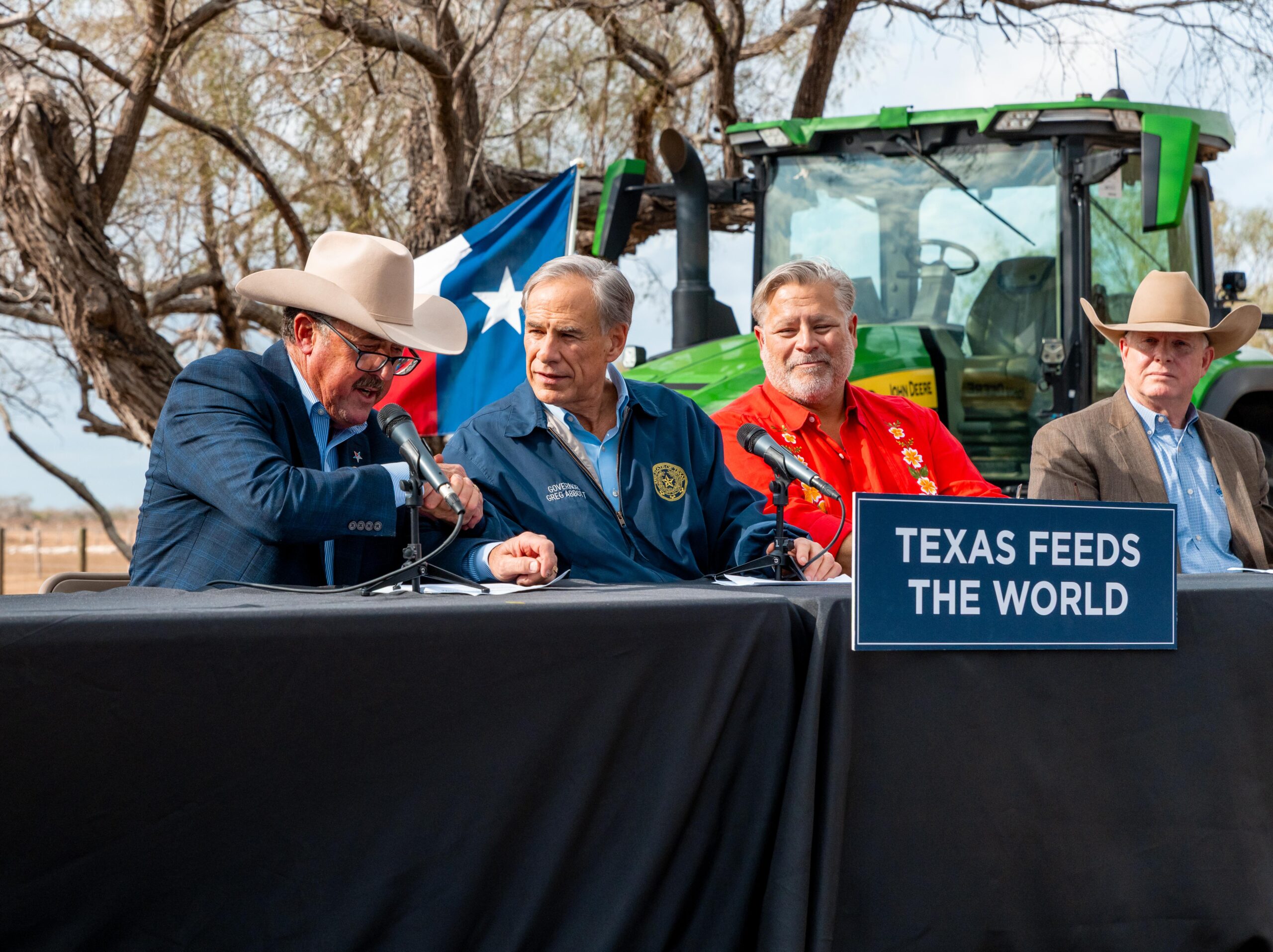
At a January 2026 gathering in Raymondville, Abbott stood beside representatives of the Texas Farm Bureau, cattle organizations, irrigation interests, wine producers and other agricultural groups as they endorsed his campaign for a fourth term. The governor told them they had a leader who had their back. Only months earlier, a proposed statewide E Verify requirement for private employers had died in the Texas Legislature without a vote in the House, preserving a system in which the state aggressively pursues unauthorized immigrants while imposing limited verification requirements on the businesses that hire them.
The divide reaches far beyond farming. Construction, hospitality, food processing, landscaping, homebuilding and elder care also rely heavily on immigrant labor. Texas political leaders want fewer unauthorized immigrants crossing the Rio Grande, but many of the businesses aligned with those leaders remain dependent on workers born outside the United States. They want the border controlled, criminal networks disrupted and labor made more predictable. They are less enthusiastic about policies that could suddenly remove large portions of the existing workforce or prevent employers from replacing those workers through legal foreign labor programs.
Abbott has not ordered immigration officers to leave farmworkers alone. He has publicly promised statewide assistance in arresting, detaining and deporting people without legal status. The available records also do not show that agricultural organizations purchased a formal exemption through lobbying or campaign contributions.
The contradiction is built into the structure of Texas policy. Abbott has cultivated a close alliance with agricultural organizations that lobby the state, finance candidates and employ former members of his administration. At the same time, Texas has concentrated its toughest enforcement on migrants, smugglers and border communities while refusing to impose a comprehensive employment verification mandate on the private businesses that create demand for unauthorized labor.
That distinction helps explain how Republican governments can sharply reduce unlawful border crossings without ending immigration or employers’ reliance on foreign workers. The likely result is a different immigration system, with fewer uncontrolled crossings, more state and federal enforcement, larger temporary visa programs and continuing resistance to measures that would impose the direct costs of enforcement on Texas businesses.
The Agricultural Alliance Is in Plain View
Abbott’s connection to agricultural political organizations is neither speculative nor hidden. His campaign endorsement event included the Texas Farm Bureau, Texas Irrigation Council, Texas Wine and Grape Growers political committee, Lone Star Hemp Coalition, the political committee of the Texas Cattle Feeders Association and the Texas and Southwestern Cattle Raisers Association. Representatives praised his actions on water, livestock, land use, regulation and rural economic policy.
These organizations have legitimate reasons to participate in government. Agriculture is exposed to water shortages, animal disease, trade disputes, environmental rules, property restrictions, labor costs and natural disasters. The governor controls appointments, emergency declarations, vetoes, administrative priorities and considerable influence over the Legislature. Farmers and ranchers have strong incentives to seek access to his office.
The relationship extends beyond routine meetings between an industry and a governor. Texas Farm Bureau’s advocacy staff directory shows how closely its lobbying, regulatory and electoral operations are integrated. Government Affairs Director Regan Beck oversees the organization’s legislative, political, commodity and regulatory divisions as well as AGFUND, its political committee.
The directory also reveals a revolving door between Abbott’s administration and the organization lobbying it. State Legislative Director Charlie Leal previously worked as a budget and policy adviser to Abbott. Associate Legislative Director Blake Roach previously served as an appointments manager and policy adviser in the governor’s office, where he handled agriculture and natural resource issues.
The movement of experienced officials into advocacy organizations is common in Austin and Washington. Former officials understand the budget, know the legislative calendar and can identify which agencies or staff members possess real authority. That knowledge is precisely why industries hire them. It gives the Farm Bureau an informed view of how the Abbott administration operates and how to present its priorities in language likely to receive a hearing.
Campaign money reinforces that access, although its scale must be described accurately. Texas Farm Bureau AGFUND’s 2026 spending records show a $50,000 contribution to Abbott. The organization gave the same amount to Lieutenant Gov. Dan Patrick and contributed to numerous legislative candidates.
For a governor with an enormous campaign treasury, $50,000 is not enough to demonstrate financial control. It does establish political alignment. The contribution sits beside endorsements, lobbying contacts, former staff relationships and the Farm Bureau’s ability to influence Republican voters in rural districts.
The greater value may be organizational rather than financial. Farm groups possess membership networks, longstanding relationships with legislators and credibility in communities essential to Republican primary victories. Their endorsement allows Abbott to present border enforcement and agricultural prosperity as parts of the same political program, even when the labor consequences of those policies pull in opposite directions.
Abbott Has Promised Deportations Without a Farmworker Exemption
Abbott has not announced that unauthorized farmworkers, ranch hands, construction laborers or other lower wage workers will be protected from removal. In February 2025, he said the Texas National Guard had been deputized to assist federal immigration authorities with apprehensions and arrests. He also said the Department of Public Safety was working with Immigration and Customs Enforcement across Texas to identify, detain and assist in deporting people without legal status.
The governor’s public description contained no occupational exception. Abbott presented the partnership as a statewide effort that would extend immigration enforcement beyond the immediate border region.
Texas has also attempted to push state authority further into a field traditionally controlled by the federal government. Senate Bill 4 created state crimes related to unlawful entry and reentry and authorized state judges to order certain migrants to return to Mexico. A federal appeals court allowed the law to take effect in May 2026 while constitutional litigation continued.
The dispute illustrates the limits of Abbott’s authority. A governor cannot create lawful immigration status, issue federal work authorization or guarantee protection from federal deportation. Admissions, visas and federal removal proceedings remain principally under federal control, even as Texas tests how far a state can participate.
The Trump administration has faced the same conflict on a national scale. In June 2025, federal officials temporarily directed immigration agents to reduce enforcement activity at farms, restaurants, hotels and meatpacking facilities after employers warned that aggressive arrests were removing workers they could not easily replace. The pause showed how quickly promises of mass deportation collided with the labor needs of industries important to the Republican coalition.
The policy did not create legal status for the workers. It altered enforcement priorities. Workers remained subject to arrest elsewhere, including at homes, courthouses, traffic stops and other workplaces.
That distinction is central to Abbott’s position. He does not need to declare a farmworker amnesty to preserve access to unauthorized labor. The practical protection can arise from where enforcement is concentrated, which industries are spared from sustained workplace operations and whether the state requires employers to verify their workers in the first place.
Texas Punishes the Supply While Preserving the Demand
Congress attempted to address unauthorized employment through the Immigration Reform and Control Act of 1986. The law combined legalization for millions of immigrants with penalties for employers who knowingly hired unauthorized workers. It also created a separate legalization process for certain agricultural laborers.
The 1986 law reflected a political bargain that would shape immigration policy for decades. The government would legalize much of the existing unauthorized population, penalize unlawful hiring and strengthen border enforcement to prevent another large unauthorized workforce from forming.
The bargain failed to eliminate unauthorized employment. Document fraud, inconsistent workplace enforcement, future labor demand and the difficulty of proving that an employer knowingly hired an unauthorized worker allowed the market to persist. Employers were required to inspect identity and work authorization documents, but they were not expected to become document experts or investigate papers that appeared genuine.
E Verify was developed to close part of that gap. The electronic system compares information supplied by a new employee with records held by federal agencies. Abbott signed a law in 2015 requiring Texas state agencies and public universities to use the program, arguing that jobs financed by taxpayers should go to people authorized to work.
The 2015 requirement did not apply to the overwhelming majority of private employers. Texas verifies workers whose paychecks come directly from state government while allowing farms, construction companies, restaurants, hotels, landscaping businesses and food processors to decide whether to use the system voluntarily.
That limited policy reveals the boundary of Abbott’s enforcement program. The state demands extensive police power over migrants but has not imposed an equivalent obligation on the businesses that employ them.
The Texas Senate attempted to close that gap in 2025. Senate Bill 324 would have required state contractors, local governments and private employers to participate in E Verify. The measure also connected compliance to state licensing and government contracts.
The legislative record shows that the bill passed the Senate and reached the House State Affairs Committee on May 2, 2025. It received no House vote before the session ended.
The bill’s failure is more revealing than another border speech. Texas Republicans have introduced dozens of E Verify proposals over more than a decade, yet the state still lacks the broad private employer mandate adopted by several other Republican governed states.
An estimated 1.3 million Texas workers lacked legal status in 2022, representing more than 8 percent of the state labor force. Agriculture, construction, restaurants and care services were among the industries with substantial numbers of unauthorized workers. Abbott’s office declined to state whether he supported forcing private businesses to use E Verify.
One Republican legislator said employers and industry organizations feared losing workers on whom they had become dependent. Most of the groups contacted about the legislation did not clearly explain their positions. Agriculture alone cannot be blamed for the measure’s failure, but the episode demonstrated the strength of business resistance whenever enforcement moves from the border to the workplace.
A universal verification mandate would be among the most direct actions Texas could take to reduce unauthorized hiring. Abbott has made border barriers, state police operations, migrant arrests and legal confrontations with Washington defining elements of his governorship. He has not made universal private employer verification an equivalent test of Republican loyalty.
The result is an enforcement system aimed primarily at the worker’s presence rather than the employer’s demand. Migrants face barriers, troops, arrests, detention and removal. Businesses continue operating in a labor market where unauthorized employment remains possible, particularly through subcontractors, labor brokers and document systems that place much of the legal risk on individual workers.
Farm Groups Want a Secure Border and a Continuing Labor Pipeline
Agricultural organizations rarely describe their preferred policy as an exemption for unauthorized workers. Their public position generally combines border security with expanded legal access to foreign labor and some form of stability for experienced workers already employed in agriculture.
The economic reason is straightforward. The Agriculture Department estimates that 42 percent of hired crop farmworkers lacked legal work authorization between 2020 and 2022. Another 19 percent were legally authorized immigrants who had not become citizens. Only about one third were born in the United States.
The department’s farm labor data show that removing unauthorized workers without quickly replacing them would affect a workforce already dominated by foreign born labor. The disruption would be concentrated in crops that require workers to plant, prune, sort and harvest by hand.
The American Farm Bureau Federation made its priorities explicit when immigration enforcement intensified in 2025. It warned that crops could remain unharvested, fruit could be left unpicked and dairy operations could lose workers needed every day of the year. The organization argued that the country could maintain a secure border while creating a dependable agricultural labor program.
Its public statement placed border control and labor access within the same policy framework. The Farm Bureau did not demand uncontrolled migration. It demanded an immigration system that would continue supplying workers to agriculture.
That position predates the current deportation campaign. In 2017, Farm Bureau President Zippy Duvall said border protection could not be pursued while leaving farmers without labor. He supported a process allowing experienced agricultural workers already in the country to adjust their status and remain in the industry.
Duvall’s remarks also warned that if American farms could not find enough labor, the United States would import more food produced by workers in other countries. The labor would not disappear from the production process. It would simply move beyond American borders.
The position is internally coherent from the perspective of growers. Agricultural employers do not necessarily favor uncontrolled border crossings. Unauthorized migration creates legal uncertainty, worker turnover and exposure to enforcement. Employers would generally prefer a reliable workforce that can enter legally, remain through the necessary season and return in later years.
The difficulty is that the existing legal program does not serve every type of agriculture.
The H 2A Program Is the Replacement Agriculture Wants Expanded
The H 2A visa program allows agricultural employers to recruit foreign workers for temporary or seasonal jobs after demonstrating that sufficient domestic workers are unavailable. The program gives employers access to a legal workforce, but it also requires applications, wage compliance, transportation arrangements and employer provided housing.
Texas Farm Bureau describes H 2A workers as dependable and reliable. It also describes the program as expensive, heavily regulated, paperwork intensive and limited to seasonal employment.
Those restrictions make H 2A more useful for crop harvesting than for dairies, poultry operations, livestock businesses and other employers that need workers throughout the year. The organization’s farm labor guidance calls for changes that would make the program cheaper, faster and available to more agricultural sectors.
Demand for the program has grown rapidly. Texas Farm Bureau reported that employers received approval for 398,258 H 2A positions nationwide in 2025, an increase of 185 percent over a decade. Texas was among the states where demand continued to rise.
The organization’s program analysis argues that automation cannot yet replace much of the physical labor required on farms and ranches. It has called for lower costs, fewer administrative requirements and broader access to guestworkers.
This is one of the most important elements of Abbott’s immigration record. Immigration restriction does not necessarily mean reducing all foreign labor. It can mean replacing a less regulated unauthorized workforce with a larger government administered temporary workforce.
Such a transition would satisfy several Republican constituencies at once. Border conservatives could point to fewer unlawful crossings. Employers could continue recruiting foreign labor. The government would possess more information about who entered, where they worked and when their authorization expired. Agricultural organizations would gain a more predictable workforce.
The transition could also increase the power employers hold over workers. An unauthorized worker can theoretically leave one employer for another, although doing so carries serious risks. An H 2A worker’s lawful status is connected to an approved job and sponsoring employer.
Expanding temporary visas without strong wage enforcement, housing inspections and practical opportunities to change employers could create a workforce that is legal but unusually dependent on the businesses that sponsored it. The future immigration conflict will concern both the number of workers admitted and the terms under which they are permitted to remain.
The Farm Bureau’s Influence Is Broader Than Campaign Checks
Campaign contributions are only one part of how political influence operates in Texas.
The Farm Bureau has members across the state, a permanent legislative operation in Austin, federal advocates, regulatory specialists, legal resources and an established political committee. Its staff follow legislation, lobby state agencies, recommend candidates and mobilize rural voters. Former Abbott officials working within that structure provide knowledge and relationships that no campaign finance disclosure can fully measure.
The organization also represents interests broader than immigrant labor. Abbott has assisted agricultural constituencies on water infrastructure, private property, animal disease, emergency relief and regulation. Ranching organizations may be more concerned with border trespassing, damaged fences and livestock safety than with crop labor. Poultry, nursery, dairy, cattle and produce businesses do not share identical workforce needs.
Labor is nevertheless one of the issues on which many of those interests converge. Agriculture requires workers willing to perform physically demanding jobs, often in severe heat, in rural areas and on irregular schedules. Employers argue that too few Americans will accept the work at wages farms can afford.
Immigration restrictionists answer that employers should raise pay, improve conditions, invest in machinery or reduce production rather than rely on foreign labor. Higher wages could attract some domestic workers and accelerate mechanization. They would also raise production costs and could push more labor intensive agriculture into other countries.
Even significant wage increases might not produce enough workers in remote agricultural areas. The adjustment would probably involve a combination of higher pay, business consolidation, automation, greater food imports and continued foreign recruitment.
Abbott benefits politically from postponing that reckoning. He can condemn illegal immigration, deploy state forces and support deportations without requiring every allied employer to prove that its workforce is authorized. The arrangement does not require a secret order. It can be sustained through selective enforcement and legislative inaction.
The High Skill Crackdown Exposed the Double Standard
Abbott’s treatment of highly skilled immigration adds another dimension. In January 2026, he ordered state agencies and public universities to freeze new H 1B visa petitions while his administration reviewed whether the federal program was being abused.
Abbott argued that taxpayer supported employment should be reserved for Texans and that state institutions should lead by example. His directive immediately restricted the ability of public employers to seek foreign engineers, researchers, physicians, professors and other professional workers.
The order was narrower than a statewide ban because Abbott cannot suspend a federal visa program for private businesses. It still demonstrated his willingness to act directly when state supported employers sought foreign professional labor.
No executive order could impose E Verify on every private farm or construction company without legislative authority. Abbott could publicly demand such a law, add it to his legislative agenda, threaten vetoes or call a special session. He has used those powers to pressure lawmakers on school vouchers, taxes, election rules and border enforcement.
He has not made universal private employer verification an equivalent priority.
The difference creates an awkward hierarchy. Highly skilled foreign workers employed by universities and state agencies became the subject of an immediate freeze. Private businesses operating in industries known to employ large numbers of unauthorized workers have faced no comparable statewide verification mandate.
Agricultural employers would argue that the two labor markets are different. H 1B workers compete for professional positions, while farms face persistent shortages in difficult manual jobs. The economic distinction is real, but it also confirms the selectivity of Abbott’s immigration policy.
The governing principle is not simply that every job must first go to an American. Labor demand, political influence, occupation and the identity of the employer all affect how aggressively that principle is enforced.
Republicans Can Reduce Immigration Without Ending It
Republican governments can substantially reduce unlawful border crossings. Migration responds to detention capacity, asylum rules, cooperation with Mexico, workplace demand, enforcement publicity and the perceived likelihood that a person will be released inside the United States.
Abbott’s barriers, state patrols and partnerships with federal authorities can make entering through Texas more difficult. A Republican administration in Washington can further restrict asylum, increase detention, conduct workplace operations and accelerate removals through powers unavailable to a governor.
A decline in border encounters does not mean immigration has ended. Permanent residents will continue entering through family and employment categories created by Congress. Temporary workers will arrive through agricultural and other visa programs. Citizens will sponsor relatives. Companies, hospitals and universities will continue seeking specialized employees.
Unauthorized residents already living in Texas will not disappear because fewer migrants cross the Rio Grande. Employers will also continue exerting pressure on the immigration system whenever they cannot recruit enough workers domestically.
A business unable to fill jobs has several options. It can raise wages, improve working conditions, invest in machinery, reduce production, move operations, recruit legal foreign workers or employ people whose documents might not survive close examination. Texas policy makes the final option more dangerous for the worker than for the economic model supporting the employer.
Republicans may succeed in converting immigration from a disorderly border phenomenon into a more controlled employer sponsored system. That would represent a significant policy change. It would not end immigration, and it might not produce a dramatic decline in the number of foreign born workers employed in Texas.
The state’s population growth, housing construction, food production, hospitality industry and care economy all require labor. Removing a substantial part of that workforce would require accepting some combination of slower growth, higher consumer prices, reduced services, greater automation and increased imports.
Most business aligned Republicans do not want all of those consequences. Their preferred solution is likely to combine stronger border enforcement with expanded legal channels for foreign workers.
The Conflict Is Political and Economic
The public record does not show that Abbott holds a personal financial interest in businesses employing unauthorized workers. It does not reveal an explicit agreement in which an agricultural contribution or endorsement was exchanged for protection from immigration enforcement. It does not establish that he ordered state officers to spare workers in a particular industry.
Abbott instead faces a conflict within his political coalition. One part demands the broadest possible deportation campaign. Another depends on industries that cannot easily absorb the sudden disappearance of unauthorized labor.
His administration has attempted to satisfy both by placing visible state power at the border while leaving much of the employment magnet intact. Migrants experience the force of the policy directly. Employers remain largely insulated from its most disruptive consequences unless federal agents enter their workplaces.
The farm lobby is only one part of that system. Construction associations, restaurants, hotels, food processors, landscapers, homebuilders and care providers share many of the same concerns. Agricultural organizations are especially revealing because they have been unusually direct about the labor shortage and unusually close to Abbott’s political operation.
Their position is not that the border should remain uncontrolled. Their position is that enforcement must be paired with a workforce system that preserves production. Abbott accepts the first half publicly while accommodating the second through limited employer enforcement, support for business and the absence of a comprehensive state crackdown on unauthorized hiring.
The Border Wall Ends at the Time Clock
Greg Abbott has built his national reputation by treating unauthorized immigration as an emergency demanding extraordinary state power. Texas has deployed troops, erected barriers, created new state crimes, cooperated with federal deportation officers and fought Washington over control of the border.
Inside the state’s labor market, the approach becomes more cautious. Texas verifies employees working directly for state government, but it has declined to require most private employers to use the same federal system. Agricultural organizations supporting Abbott openly warn that sustained workplace enforcement can leave crops unharvested and livestock unattended. They are pressing for a larger, cheaper and more flexible foreign worker program.
Abbott has not secretly immunized farmworkers from deportation. His immigration program operates through selective pressure. It is strongest where migrants cross the border, encounter police or enter the criminal justice system. It is weaker where enforcement would directly disrupt the industries, donors and political organizations that help sustain Republican power in Texas.
The contradiction will become harder to conceal as the state approaches the 2030s. Texas can reduce unauthorized entry. It can deport more people. It can expand legal guestworker programs. It can require employers to verify every worker.
It cannot easily remove a substantial labor force, preserve rapid economic growth, keep consumer prices stable and offer businesses no replacement workers.
Abbott has so far avoided choosing among those outcomes. His alliance with agricultural interests helps explain why.