America’s fraud problem is no longer a story about a few forged forms or scattered bad actors. It has become a structural weakness in the welfare state, the grant system, the nonprofit sector, local school governance and health-care reimbursement. In Minnesota, the Justice Department said the Feeding Our Future case diverted $250 million from a child-nutrition program meant to feed vulnerable children. A Minnesota legislative audit later found that the state Department of Education failed to act on warning signs and that weak oversight created opportunities for fraud.
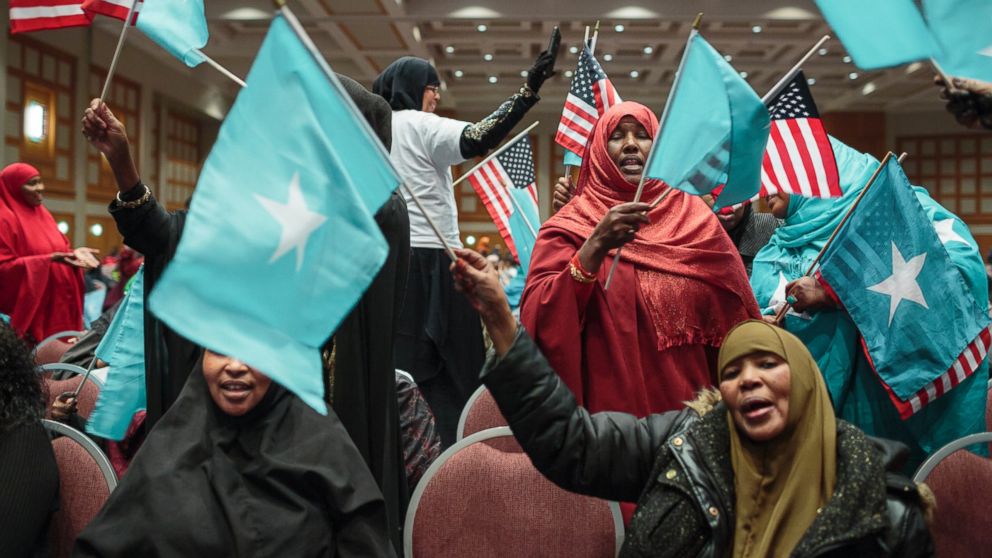
The pattern did not stop with one pandemic-era food program. In May 2026, the Justice Department announced new Minnesota charges against 15 defendants in alleged schemes involving more than $90 million in intended loss, including what federal officials described as the two largest Medicaid fraud cases ever brought in the District of Minnesota. The Associated Press reported that many defendants in the broader Minnesota fraud cases were Somali Americans, while also noting warnings from community leaders against treating criminal charges as an indictment of the entire Somali community.
New York has produced its own version of the same problem. In Brooklyn, Central United Talmudic Academy admitted in federal court to a program-and-benefit fraud conspiracy involving public money, including funds designated to feed needy children, and agreed to pay $5 million in penalties in addition to more than $3 million in restitution already paid, the U.S. Attorney’s Office for the Eastern District of New York said. In East Ramapo, state monitors documented a public-school district where most school-age children attended private religious schools while the public-school system faced deep cuts, rising transportation costs and years of state intervention, a record maintained by the New York State Education Department.
Birth tourism sits at the edge of the same debate because giving birth in the United States is not illegal by itself, but using a visitor visa primarily to obtain U.S. citizenship for a child is not a permissible purpose for travel. The State Department made that rule explicit in 2020. The cost gap has made the issue even more explosive: KFF found that pregnancy, childbirth and postpartum care averaged $20,416 for women enrolled in employer-sponsored plans, while newborns under three months averaged another $5,820 in health spending. Meanwhile, South Texas billboards tied to Mission Regional Medical Center advertised foreign-patient birth packages at $3,950 for natural delivery and $5,525 for a C-section, Texas Border Business reported.
The facts are strongest when they are named narrowly: specific defendants, specific institutions, specific programs and specific oversight failures. The public record does not support blaming an entire ethnicity, religion or immigrant population. It does support a harder conclusion: America has built public-money systems that are easy to exploit, slow to audit and often too politically sensitive for officials to confront until the damage is already done.
Minnesota Became the Warning Sign
The clearest modern example is Minnesota’s Feeding Our Future scandal. Aimee Bock, the founder and executive director of Feeding Our Future, was sentenced to 500 months in prison for her lead role in a $250 million fraud scheme that exploited a federally funded child-nutrition program during the COVID-19 pandemic, the Justice Department announced. Prosecutors said taxpayer funds meant to feed vulnerable children were instead used for luxury vehicles, residential and commercial real estate and international travel.
The state’s watchdog later reached a devastating conclusion about how the fraud became possible. A Minnesota Office of the Legislative Auditor review found that the Department of Education’s oversight failures created openings for fraud and that officials failed to act on warning signs known before the pandemic and before the alleged fraud began.
That is the core of the scandal. The fraud did not happen merely because people lied. It happened because government built a reimbursement machine that allowed claims to move faster than verification. The state paid first, questioned later and discovered too late that invoices, meal counts and vendor records could be manufactured at scale.
The case also became politically explosive because many defendants in the broader Minnesota fraud investigations were Somali Americans. AP’s review reported that federal authorities had charged 92 people and that 82 of them were Somali Americans, while also including warnings from Somali community leaders against turning individual criminal charges into collective blame.
That distinction matters. Public reporting should not hide the facts of a case because they are uncomfortable. It also should not turn criminal indictments into group guilt. The accurate story is that prosecutors found large-scale fraud moving through provider networks in Minnesota, including many defendants from one immigrant community, while state agencies failed to impose verification systems strong enough to stop it early.
From Child Nutrition to Medicaid and Autism Programs
Feeding Our Future was not the end of the Minnesota problem. In May 2026, the Justice Department announced criminal charges against 15 defendants in alleged schemes involving more than $90 million in intended loss, including owners of child-care centers and Medicaid providers.
The case summaries show how the fraud allegedly worked. Federal prosecutors said providers billed Minnesota Medicaid for housing stabilization services, integrated community supports and other programs even when services were not actually provided. In one case, prosecutors alleged that a defendant submitted $5.3 million in fraudulent Housing Stabilization Services claims, with about $5.2 million paid. In another, providers were accused of submitting $3.3 million in fraudulent claims for services not provided, with about $3.2 million paid, as outlined in the Justice Department’s case summaries.
The government’s language was unusually blunt. Assistant Attorney General Colin McDonald said seven Minnesota-managed Medicaid programs had been “systematically pilfered” by fraudsters who treated the programs as a personal piggy bank, language he used in his official Justice Department remarks.
Minnesota is now a national case study in what happens when public benefits are routed through third-party providers without aggressive verification. Programs meant for children, the disabled, the homeless and low-income families became targets because they had money, urgency and weak controls. The fraudsters did not need to defeat a sophisticated system. They needed to understand where the system did not look.
Brooklyn’s Private-School Fraud Case
New York has its own record of public-money fraud involving private religious education. In 2022, Central United Talmudic Academy in Williamsburg, Brooklyn, admitted in federal court that it was involved in several overlapping frauds, including a multimillion-dollar scheme to wrongfully obtain funds designated to feed needy schoolchildren. The school entered a deferred prosecution agreement and agreed to pay $5 million in penalties, on top of more than $3 million in restitution already paid, the U.S. Attorney’s Office for the Eastern District of New York announced.
That case matters because it shows how public-benefit fraud can be hidden inside respected institutions. A school, nonprofit or community organization can look legitimate from the outside while using its status to obtain funds it should never have received. When enforcement finally arrives, the money is often already spent, moved or passed through layers of accounts and vendors.
The Brooklyn case also fits a broader pattern in government fraud: programs designed for the poor are especially vulnerable when government relies on self-certification and trusted intermediaries. Child-nutrition programs, Medicaid services, special-education reimbursements and emergency aid all carry the same weakness. They exist for urgent moral reasons, but that urgency can be exploited by people who learn how to bill the state faster than the state can audit them.
East Ramapo and the Politics of School-Board Capture
The East Ramapo Central School District in Rockland County is a different kind of case. It is less about a single criminal fraud indictment and more about the use of political power to redirect public resources. New York state monitors have documented years of state intervention in a district where public-school families and private-school constituencies fight over the same tax base, with the New York State Education Department maintaining an archive of monitor reports, budget reviews and intervention records.
The numbers explain why the district became a national symbol of school-board capture. A 2017 state monitor report said nearly 25,000 students attended nonpublic schools, mainly Orthodox Jewish private schools, while about 8,650 students attended public schools. The same report said transporting 33,350 students, including 24,700 nonpublic students, had created the state’s second-largest school transportation system after New York City, costing $29 million in 2015-16, as shown in the state report A New Beginning.
A state fiscal monitor presentation from 2014 described deep public-school cuts while spending on programs benefiting private schools increased. The presentation listed the elimination of 45 positions, including 15 special-education teachers, 16 secondary teachers, five one-on-one aides and two nurses. It also showed transportation spending rising from $22 million in 2009-10 to $27.3 million in 2013-14, while special-education tuition costs increased by 33 percent from 2010-11 to 2013-14, figures contained in the state presentation East Ramapo: A School District in Crisis.
The school-board problem is straightforward. When a voting bloc controls a public-school board while many of its own children attend private schools, the incentive structure changes. The board controls the tax base and the budget, but the political demand is often directed toward transportation, textbooks, special education and other services for nonpublic-school students. Public-school families can become the losers in a system they still fund.
The issue is not whether religious schools should exist. They have a right to exist. The issue is whether public-school governance can function when the elected board is politically accountable to voters whose main educational interest lies outside the public schools themselves. East Ramapo shows how quickly that conflict can turn into a crisis of public trust.
Birth Tourism and the Cost Gap
Birth tourism belongs in this discussion because it exposes another weakness in American public policy: the gap between the law on paper, hospital billing in practice and the cost burden placed on ordinary American families. Giving birth in the United States is not illegal by itself. The legal problem begins when foreign nationals lie about the purpose of travel, misrepresent finances, use tourist visas primarily to obtain U.S. citizenship for a child or leave medical bills unpaid.
The federal government addressed that problem in 2020. The State Department amended its B-visa rules so that consular officers would deny applications when they had reason to believe an applicant was traveling primarily to give birth in the United States to obtain citizenship for the child. The Federal Register rule went further, stating that travel for the primary purpose of obtaining U.S. citizenship for a child by giving birth in the United States is an impermissible basis for a B visa, while also requiring medical-travel applicants to show treatment arrangements and ability to pay.
In South Texas, Mission Regional Medical Center came under state scrutiny after billboards advertised “Birth Packages in South Texas” to foreign patients. The reported prices were $3,950 for natural delivery and $5,525 for a C-section, Texas Border Business reported. Gov. Greg Abbott then directed the Texas Health and Human Services Commission to investigate whether the hospital violated state law or contractual obligations, a development covered in a separate Texas Border Business report.
The cost contrast is politically powerful because American childbirth is expensive. KFF found average total health costs of $20,416 for pregnancy, childbirth and postpartum care among women enrolled in employer-sponsored plans, plus another $5,820 in average health spending for newborns under three months old. That puts ordinary American families in a system where medical spending around birth and early infancy can exceed $25,000, while foreign-patient packages have been advertised in South Texas for only a few thousand dollars.
Emergency Medicaid adds another layer. Federal law generally bars undocumented immigrants from ordinary federally funded Medicaid, but Emergency Medicaid reimburses hospitals for emergency care provided to people who meet other eligibility requirements but lack eligible immigration status. KFF notes that much Emergency Medicaid spending goes toward labor and delivery costs, even though Emergency Medicaid represented only 0.4 percent of total Medicaid spending in fiscal year 2023. Federal regulations also allow limited services for certain noncitizens, including emergency medical services and services for pregnant women, under 42 CFR § 440.255.
That leaves a legitimate policy question. American families can face medical spending above $25,000 around pregnancy and early infancy. Foreign patients may see advertised cash packages for a fraction of that amount. Some noncitizens may have emergency costs absorbed through public programs, hospital charity care or unpaid bills. The country should not tolerate a system where citizenship, insurance status and hospital billing games create one price for ordinary American families and another for people exploiting weak enforcement.
The National Fraud Problem Is Bigger Than Any One Group
The mistake in these debates is to treat every scandal as isolated. It is not isolated. The Government Accountability Office reported that in fiscal year 2025, 15 federal agencies estimated about $186 billion in improper payments across 64 programs, with about $153 billion of that total coming from overpayments.
GAO also cautions that improper payments are not always fraud. They can include overpayments, eligibility errors, payments made in the wrong amount and payments made without adequate documentation. But that distinction should not make the public feel better. It shows that the federal government often cannot prove, before payment, whether public money is going to the right person, in the right amount, for the right reason. GAO’s own summary says improper-payment estimates have totaled about $3 trillion since fiscal year 2003, a figure highlighted in its 2026 improper-payments overview.
Pandemic spending exposed the weakness at historic scale. GAO reported that the Justice Department had publicly announced criminal fraud-related charges involving pandemic-relief programs against at least 3,096 defendants by the end of 2024, while federal investigators continued to estimate massive losses across pandemic programs.
That is the national story behind Minnesota, Brooklyn, East Ramapo and birth tourism. Government created programs with moral urgency and weak verification. Fraudsters learned the paperwork. Public officials often discovered the abuse only after journalists, whistleblowers, auditors or prosecutors forced the issue.
What Should Change
The first reform is simple: verify before payment. Agencies should not reimburse millions of dollars based only on forms submitted by providers with limited history, related-party vendors or suspicious growth. When a provider’s claims explode from thousands to millions, payment should pause automatically until auditors confirm the services were real.
The second reform is ownership transparency. Every nonprofit, school vendor, Medicaid provider, child-care operator and contractor receiving public money should disclose beneficial owners, related companies, family-controlled vendors and overseas transfers. Fraud often hides in networks. Government should map those networks before money moves.
The third reform is cross-program data matching. Minnesota’s cases show that the same actors can bill multiple programs at once. Agencies should be able to detect when one person, address, vendor, bank account or business network appears across child nutrition, housing, Medicaid, autism services and child-care payments.
The fourth reform is stronger local conflict-of-interest law. School-board members should not be able to govern public-school budgets while quietly prioritizing private-school constituencies without aggressive disclosure, state monitoring and fiscal review. East Ramapo shows that school-board capture can hollow out public education without needing a single dramatic criminal indictment.
The fifth reform is birth-tourism enforcement that focuses on fraud, billing and visa abuse. Visa officers should enforce the State Department rule against travel for the primary purpose of obtaining citizenship for a child. Hospitals that market birth packages abroad should be required to document full payment, lawful medical travel and compliance with state and federal rules before offering discounted packages that undercut American families.
The final reform is political honesty. Fraud is committed by individuals and institutions, not by races or religions. But government also loses credibility when officials refuse to discuss patterns because the facts are socially uncomfortable. Taxpayers are entitled to know who took the money, how they got it, which agencies failed to stop it and whether political influence protected the system from scrutiny.
Public generosity depends on public trust. When money meant for hungry children, disabled patients, poor families or public-school students is siphoned away, the victims are not abstractions. They are the children who were not fed, the patients who did not receive care, the families who paid their taxes and the citizens who watched government treat accountability as an afterthought.