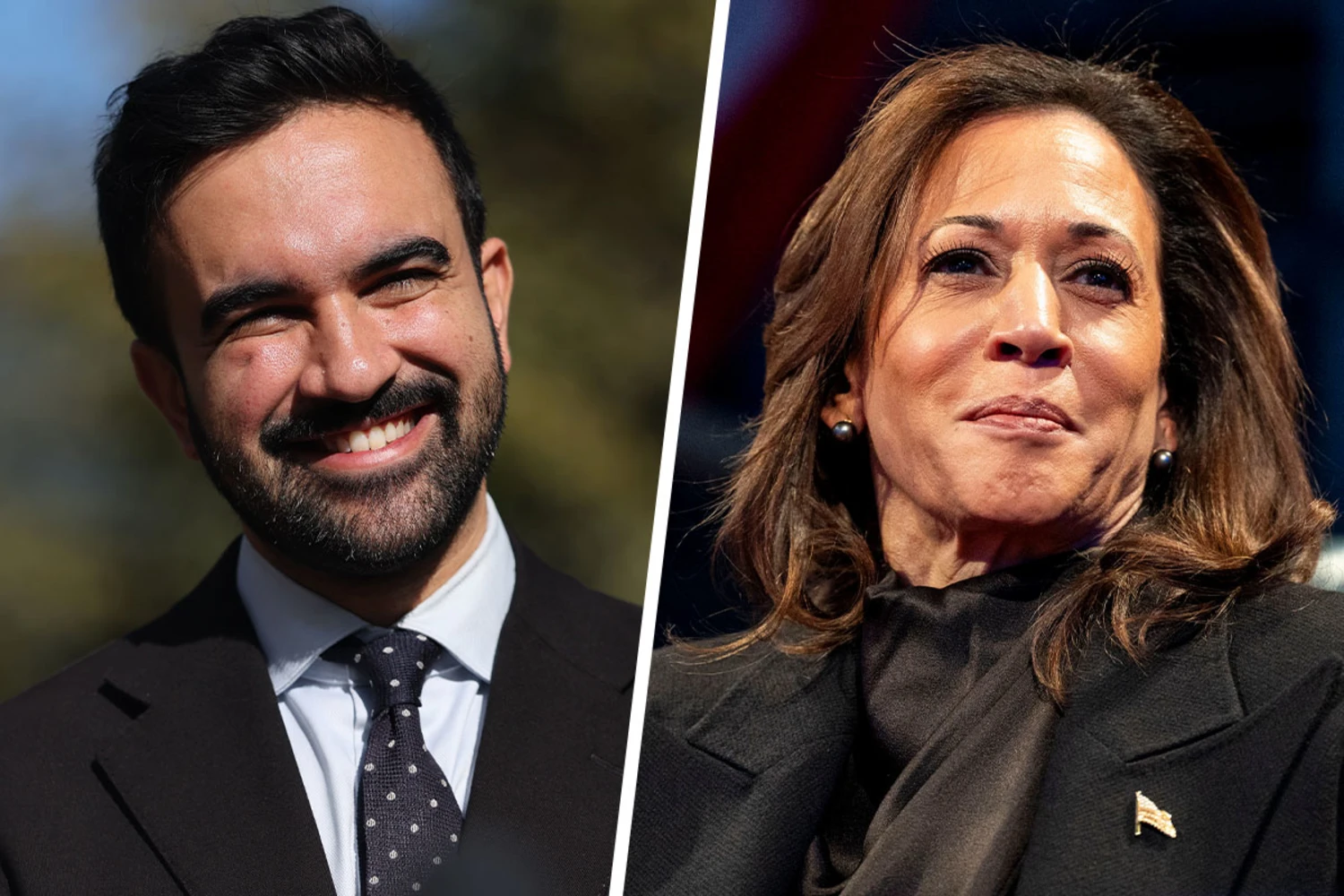
Former Vice President Kamala Harris has begun cultivating a relationship with New York City Mayor Zohran Mamdani as speculation continues about another presidential campaign in 2028. Mamdani confirmed that Harris had contacted him and that the two had remained in touch for several months.
The outreach followed a remarkable demonstration of Mamdani’s power. All three congressional candidates he endorsed won their June 23 Democratic primaries. Claire Valdez captured the nomination in New York’s 7th District, former city comptroller Brad Lander defeated Rep. Dan Goldman in the 10th and Darializa Avila Chevalier unseated Rep. Adriano Espaillat in the 13th. The Associated Press concluded that the victories would probably send two additional self described democratic socialists to Congress from overwhelmingly Democratic districts.
Yet the personalities and records behind that triumph complicate the movement’s preferred story. These were not merely insurgent candidates offering cheaper housing, universal healthcare and stronger labor protections. Some carried histories of rhetoric so radical that a serious examination of the socialist advance cannot treat them as ordinary progressives with a more ambitious economic program.
The Congressional Nominee Who Wanted Police and Borders Abolished
Avila Chevalier’s victory over Espaillat was the slate’s most consequential upset. It was also the race that exposed how much Democratic primary voters were prepared to overlook.
Archived posts from her deleted account included support for abolishing police, prisons and national borders. She reposted calls to nationalize utilities, hospitals and pharmaceutical companies, dissolve private health insurance and seize property from landlords. When another user suggested that abolishing police might mean replacing existing institutions rather than ending policing altogether, she responded that it meant “no more police at all ever.”
The same archive contained a post saying she had forgotten napkins and therefore wiped her hands on an American flag. The screenshot was not fabricated. A fact check traced the statement to her authentic account and dated it to 2019.
Other archived material was equally revealing. Avila Chevalier reposted a statement that Israel did not exist, wrote “seize the means of production,” argued that all deportations were wrong and referred to Joe Biden as a rapist and war criminal. She also reposted racially charged language about Black and Arab men who date white women and attacked Kamala Harris in terms she later acknowledged she would not use today.
These statements were not simply Republican opposition research imposed upon an otherwise conventional campaign. They described a political worldview in which policing, national borders, private property and the legitimacy of an allied country were all treated as institutions to be abolished or overcome. Her current platform remains committed to abolishing ICE, ending the deportation system and expanding government control over housing and healthcare.
Avila Chevalier said she had grown since publishing the posts and accused Espaillat of relitigating statements from years earlier. That defense deserves to be included. It does not erase the need to determine which beliefs she abandoned and which she merely learned to express more carefully.
The distinction became harder to establish when she walked out of a live radio interview after hosts pressed her to address old statements about Dominican nationalism and the Dominican flag. She expressed general regret but resisted answering individual questions before removing her headphones and leaving the studio. The confrontation raised a basic issue of accountability. A candidate seeking a seat in Congress cannot reasonably dismiss scrutiny of her own written record as an irrelevant distraction.
The State Senate Winner and the 9/11 Controversy
Aber Kawas, another Mamdani backed democratic socialist, won the nomination for a Queens state Senate district after earlier comments about the September 11 attacks resurfaced.
Some coverage reduced the controversy to the claim that Kawas said America deserved 9/11. The available quotation requires greater precision. In a 2017 discussion, Kawas argued that capitalism, racism, white supremacy and Islamophobia had been used to colonize lands and seize resources, describing 9/11 as a manifestation of that historical trajectory. She later referred to the attack as something “a couple of people did” while objecting to demands that Muslims apologize collectively for it.
Those remarks did not explicitly say the victims deserved to die. They did place a terrorist attack committed by al Qaeda inside a theory of American culpability while diminishing its perpetrators to “a couple of people.” That framing is controversial on its own terms and does not need exaggeration.
Kawas responded that her remarks had been selectively edited and that she was condemning the scapegoating of Muslim Americans for crimes they did not commit. She called the criticism an Islamophobic smear. Her explanation clarifies the argument she intended to make, but it does not resolve the judgment shown in treating the murder of nearly 3,000 people as an extension of American economic and racial systems.
Her campaign was not an isolated candidacy. New York City DSA openly presented Kawas as part of its largest state legislative slate, promoting her opposition to ICE, support for immigrant protections and demand for fare free buses. The organization’s own candidate page declared that socialists were coming to Congress to fight ICE, war and what it called genocide.
Mamdani Endorsed the Candidates After the Controversies Emerged
The significance of these records extends beyond two candidates because Mamdani continued supporting them after their statements became public.
Avila Chevalier’s deleted posts were widely reported weeks before the primary. Mamdani said he had not seen them when he initially offered his endorsement, but he did not withdraw it after reviewing the controversy. He instead praised her as a champion for working families who would confront landlords, corporate power and Washington’s political establishment.
That decision established the movement’s practical standard. Radical language could be attributed to youth, anger or an earlier political period, while current adherence to the movement’s principal causes remained sufficient for continued support.
The strategy succeeded. DSA backed candidates won congressional, state Senate and Assembly contests across the city, with only one member of the legislative slate losing. The results demonstrated an organization capable of recruiting candidates, mobilizing volunteers and defeating established officeholders in low participation Democratic primaries.
Harris Is Making a Calculation
Harris’s outreach to Mamdani should be understood in that context. She is not merely speaking with a popular mayor. She is engaging the leader of a faction that has demonstrated the ability to remove Democratic incumbents and create a new congressional bench.
The socialist wing remains a minority within the national Democratic coalition. A recent Pew survey found that 32 percent of Democrats and Democratic leaning independents viewed leaders identifying as democratic socialists favorably. Support was considerably higher among liberals and Democrats who closely follow politics, the same groups most likely to volunteer and vote in primaries.
That concentration gives the movement leverage beyond its numerical size. Harris may believe she can benefit from its organizers and younger voters without adopting its entire agenda. The risk is that political courtship normalizes the faction’s standards before national voters have examined them.
Mamdani’s slate did not win because every voter endorsed every deleted post or controversial statement. Many probably voted on housing costs, healthcare, dissatisfaction with incumbents and the belief that established Democrats had failed them. Those concerns are real. They do not absolve candidates of responsibility for records that reveal contempt for institutions they may soon possess the power to reshape.
Kamala Harris is free to speak with any faction inside her party. The revealing question is what she is willing to ignore in exchange for its support.