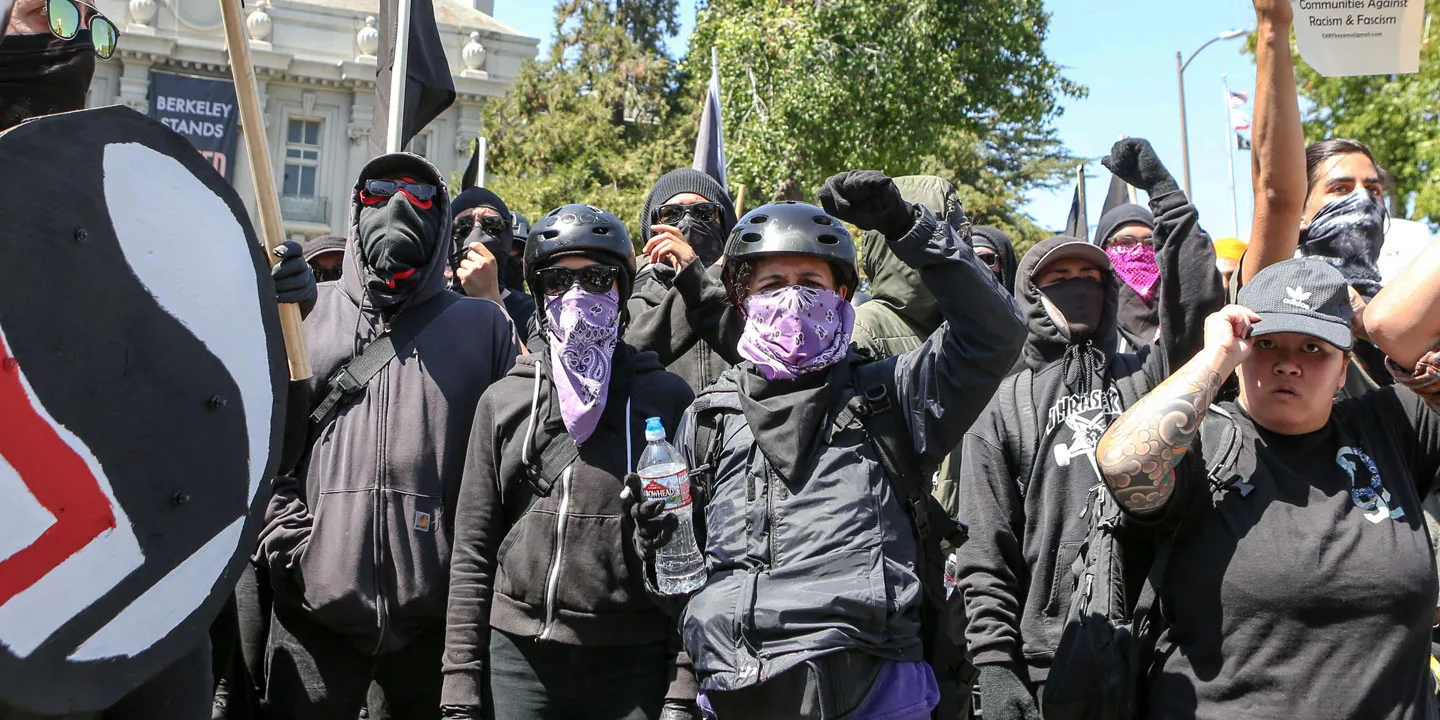
American colleges did not change overnight. There was no single meeting, no single law, no single professor, and no single student protest that transformed higher education into one of the most politically contested institutions in the country. The change happened more slowly than that. It came through faculty hiring, student activism, administrative expansion, new academic departments, legal pressure, federal funding, accreditation standards, and the rise of a campus bureaucracy whose job was no longer only to educate students, but to shape them.
The result is visible now. Many universities still produce excellent engineers, doctors, lawyers, scientists, and scholars. But alongside that work, a large part of higher education has embraced a political mission: not merely to teach students what is true, but to train them to see society through the language of oppression, privilege, identity, equity, and activism.
That mission is overwhelmingly associated with the modern left. It does not mean every professor is a communist, or that every liberal arts class is propaganda. That would be false. But it is also false to pretend the ideological imbalance on campus is imaginary. The leftward drift of the university is measurable, historical, and institutional.
The deeper question is how it happened.
The University Before the Revolt
For much of American history, colleges were elite institutions built around classical education, Protestant moral formation, civic leadership, and professional preparation. They were not politically neutral in the modern sense, but they were also not built around the present-day idea that the university must become an instrument of social transformation.
By the early twentieth century, American higher education had already changed dramatically. German-style research universities influenced institutions like Johns Hopkins, Harvard, Chicago, and Columbia. The modern university became more specialized, more bureaucratic, and more dependent on expert knowledge. Professors increasingly saw themselves not merely as teachers of inherited wisdom, but as producers of new knowledge.
That shift mattered. Once the university became the home of expertise, social science, psychology, sociology, economics, and political theory began to reshape how educated Americans thought about law, culture, family, religion, race, sex, and the state. The old liberal arts model did not disappear, but it lost ground to the modern research model.
By the 1930s and 1940s, communism had a real presence in American intellectual life, especially during the Popular Front era, when communists and fellow travelers entered coalitions with liberals, unions, artists, journalists, and academics. But the Communist Party USA never became the dominant force inside American universities. Historian Jonathan Hunt’s study of radicals in American education from 1930 to 1960 notes that Communist Party membership among higher-education faculty was probably no more than about one percent.
That matters because the real story is not that Moscow took over American colleges. The more accurate story is that Marxist and left-wing frameworks entered academic life through intellectual culture, labor politics, anti-fascism, civil rights activism, and later the student radicalism of the 1960s.
The old communist movement mattered. But the New Left mattered more.
The 1960s: The Campus Becomes a Political Machine
The ideological transformation of the university cannot be understood without the 1960s. The decade turned the campus into a political battlefield.
The civil rights movement, the Vietnam War, the sexual revolution, the rise of television, the draft, the growth of federal higher-education funding, and the expansion of the student population all collided at once. Millions of young Americans entered colleges at the exact moment when trust in traditional institutions — government, church, family, police, the military, and universities themselves — began to collapse.
The Students for a Democratic Society, or SDS, became one of the defining organizations of the New Left. Its 1962 Port Huron Statement, written primarily by Tom Hayden, presented college students as a generation “housed now in universities” and uneasy with the world they were inheriting. The document called for participatory democracy, attacked militarism and alienation, and urged students to become agents of political change.
This was not old-fashioned liberalism. It was not simply a demand for better classes or better dorms. It was a demand that the university become a base of social action.
The Berkeley Free Speech Movement of 1964 became another turning point. Students at the University of California, Berkeley protested restrictions on political activity on campus. The movement began over speech rights, but it quickly became a symbol of student power and anti-establishment politics. Berkeley’s own history says the Free Speech Movement led the university to overturn policies restricting political advocacy and became a symbol of free speech and academic freedom. The UC Berkeley Library’s Oral History Center also preserves extensive records on the Free Speech Movement and its role in campus politics.
There is an irony here. The campus left of the 1960s often fought for speech against administrative control. Today, many critics argue that the ideological heirs of campus radicalism have become the administrators, speech regulators, bias-response officials, and DEI officers who now police dissent. The Free Speech Movement began as a revolt against institutional censorship. The modern campus often justifies censorship in the language of safety, inclusion, and harm.
That is one of the great reversals in American academic history.
The New Left Was Not Just “Liberal”
The New Left was different from the old American liberal tradition. Old liberals emphasized constitutional rights, legal equality, labor reform, and gradual progress through democratic institutions. The New Left was more suspicious of those institutions. It attacked bureaucracy, capitalism, militarism, racism, sexual restraint, middle-class conformity, and the Cold War consensus.
Many New Left activists rejected the Soviet Union’s authoritarianism, but they still drew from Marxist and neo-Marxist ideas. They saw society as a struggle between oppressor and oppressed, dominant and marginalized, powerful and powerless. Economic class remained important, but race, sex, colonialism, culture, and identity became increasingly central.
This is where communism enters the story in a serious way. The campus radicals of the 1960s were not all card-carrying communists. Many were not communists at all. But Marxist categories shaped much of the movement’s language: capitalism as exploitation, revolution as moral necessity, bourgeois society as spiritually empty, and oppressed groups as the carriers of future liberation.
Herbert Marcuse, a German-born philosopher associated with the Frankfurt School, became one of the intellectual heroes of the New Left. His 1964 book One-Dimensional Man argued that advanced industrial society had absorbed dissent and produced conformity through consumer culture, technology, and mass media. Marcuse became known as a major intellectual influence on the New Left because he gave radical students a theoretical language for rejecting liberal capitalism without simply repeating Soviet propaganda. EBSCO’s research summary on Marcuse describes him as publishing foundational New Left works.
Marcuse’s influence is important because it shows how Marxism survived in American universities after the old Communist Party lost power and legitimacy. It survived less as party membership and more as critique: critique of capitalism, critique of family structures, critique of mass culture, critique of Western civilization, critique of traditional morality, critique of objective neutrality, and critique of meritocracy.
That style of thought became deeply embedded in the humanities and social sciences.
From Protest to Permanent Institution
The key question is how a protest movement became an institutional culture.
The first stage was activism. The second was academic recognition. The third was bureaucracy.
In the late 1960s and 1970s, student demands helped create new departments and programs: Black studies, women’s studies, ethnic studies, Chicano studies, gender studies, peace studies, and later queer theory and critical race theory. Some of these fields produced serious scholarship. They also changed the purpose of the university. The older model asked students to study history, philosophy, literature, science, and law as disciplines. The newer activist model often treated academic disciplines as instruments for liberation politics.
This did not happen everywhere in the same way. Engineering departments did not become the same as sociology departments. Medical schools did not become the same as English departments. But the ideological center of gravity in the humanities and social sciences moved left.
Over time, the activists became graduate students. Graduate students became professors. Professors trained future professors. Academic journals, hiring committees, tenure standards, and conferences rewarded certain frameworks and punished others. Conservative, traditionalist, religious, nationalist, and anti-communist arguments became less common in elite academic life, especially outside business, economics, law, and some STEM fields.
The ideological shift became self-reinforcing.
The Faculty Data Shows the Imbalance
The claim that college faculties lean left is not merely a conservative complaint. It is supported by survey data.
The Higher Education Research Institute at UCLA reported in The American College Teacher: National Norms for the 2016–2017 HERI Faculty Survey that 48.3 percent of faculty identified as liberal and 11.6 percent as far left. Only 11.7 percent identified as conservative and 0.4 percent as far right. Another 28.1 percent identified as middle-of-the-road.
That data requires precision. It does not prove every professor indoctrinates students. It does not prove all departments are identical. It does not prove all liberals are radicals. But it does show a clear ideological imbalance.
The imbalance is even sharper in many elite humanities and social-science settings, where conservatives can be rare enough that students may complete entire degrees without hearing a strong conservative argument presented by someone who actually believes it.
The problem is not simply that professors vote Democrat. Universities can survive political imbalance if they preserve intellectual pluralism. The deeper problem is what happens when one worldview becomes so dominant that it mistakes itself for neutrality.
When that happens, students are not told, “Here is one political interpretation.” They are told, “This is what educated people believe.”
The Administrator Class
The ideological transformation of colleges did not stop with professors. In many cases, the more important shift came from administrators.
Modern universities employ armies of student-affairs officials, residence-life staff, conduct officers, Title IX officials, inclusion officers, diversity officers, communications staff, wellness staff, bias-response teams, and compliance professionals. Some of these positions exist because universities are legally complex institutions. But over time, administrative growth created a new power center on campus.
A Cleveland Federal Reserve analysis of college employment from 1987 to 2013 found that the share of employees classified as executives, administrators, or managers did not change dramatically, complicating the simple “administrative bloat” narrative. The report, titled “Trends in Employment at US Colleges and Universities, 1987–2013,” is useful because it keeps the argument honest: the issue is not only how many administrators exist, but what kind of authority they exercise.
The nature of administration changed. A university can keep the same broad employment category while expanding offices whose job is to manage speech, identity, student conduct, “belonging,” and political conflict.
Survey work on student-facing administrators has also found a strong ideological imbalance. NORC’s project on administrators’ views on campus life, diversity, and politics examined how these officials think about campus culture and political conflict. This matters because students often encounter the university not through the tenured professor, but through orientation programs, residence-life training, conduct hearings, mandatory workshops, diversity statements, and student-affairs offices.
A professor may assign Marx. An administrator can make ideological compliance a condition of campus life.
DEI: From Slogan to Governing System
Diversity, equity, and inclusion did not appear from nowhere. Its roots run through civil-rights law, affirmative action, anti-discrimination policy, multicultural education, and the activist academic movements of the late twentieth century.
Some DEI work is ordinary and defensible: ensuring disabled students receive accommodations, preventing unlawful discrimination, helping first-generation students navigate college, or making sure all students can participate in campus life. No serious argument about higher education should deny that universities have obligations to treat students fairly.
The controversy begins when DEI becomes a governing ideology.
“Diversity” can mean viewpoint diversity, regional diversity, class diversity, religious diversity, and intellectual diversity. But in practice, campus DEI often focuses on race, sex, gender identity, sexual orientation, and group identity. “Equity” often moves beyond equal treatment into equalized outcomes or group-conscious preferences. “Inclusion” can become a justification for limiting speech deemed harmful to protected identities.
The Heritage Foundation’s 2021 report “Diversity University: DEI Bloat in the Academy”, written from a conservative perspective, found an average of 45 DEI personnel across the universities it examined, with the University of Michigan listed at 163. Critics of Heritage’s ideology can dispute its framing, but the broader fact is undeniable: DEI became a formal administrative structure across American higher education.
The University of Michigan is one of the clearest examples. After years of major investment in DEI, the university later moved to end diversity statements in faculty hiring, promotion, and tenure after a faculty committee warned that such statements could restrict freedom of expression and intellectual diversity. The university announced this shift in its March 2025 statement, “Evolving our approach to DEI and moving forward together.”
Texas provides another example. Senate Bill 17, signed into law in 2023 and effective in 2024, prohibited DEI offices and certain DEI programs at public colleges and universities. The University of Texas at Austin’s compliance page describes Texas Senate Bill 17 as a prohibition on diversity, equity, and inclusion offices and programs at public institutions. According to the Associated Press, Texas university systems later reported hundreds of positions and programs cut to comply with the DEI ban, including 300 jobs and more than 600 DEI-related programs in the University of Texas System.
Supporters of these bans argue that taxpayers should not fund ideological bureaucracies. Opponents argue that the bans are overbroad and chill lawful support services for minority and disadvantaged students. Both arguments deserve to be heard. But the political reaction itself proves the main point: DEI had become powerful enough that state legislatures began treating it as a governing structure, not a campus side project.
Speech, Safety, and the New Campus Orthodoxy
One of the most damaging developments in higher education has been the redefinition of speech as harm.
The Knight Foundation and Ipsos found in 2024 that the share of college students who felt uncomfortable because of speech about race, gender, religion, or sexual orientation had nearly doubled since 2017, rising from 25 percent to 44 percent. The same study found that 55 percent reported discomfort from political speech. Those findings appear in Knight Foundation’s report, “College Student Views on Free Expression and Campus Speech 2024.”
The Foundation for Individual Rights and Expression’s 2025 College Free Speech Rankings found that 17 percent of students said they felt they could not express an opinion at least a couple of times per week because of how students, professors, or administrators might respond. FIRE’s broader College Free Speech Rankings also report significant levels of classroom self-censorship.
A university cannot function if students are trained to treat disagreement as injury. The point of a university is not emotional insulation. It is disciplined exposure to reality, argument, evidence, and truth.
The old campus radical demanded the right to speak. The new campus censor demands the right not to hear.
That shift is the heart of the ideological problem.
The Communist Template: Class Struggle Rewritten as Identity Struggle
The modern campus left is not identical to twentieth-century communism. It does not usually demand state ownership of all property. It does not usually quote Lenin in student orientation. It often speaks the language of diversity, therapeutic care, social justice, anti-racism, gender identity, and inclusion rather than the language of proletarian revolution.
But the structure of thought is often similar.
Classical Marxism divided society into bourgeois oppressor and proletarian oppressed. Modern academic radicalism often divides society into privileged and marginalized identities. Classical Marxism treated law, religion, culture, and morality as instruments of class power. Modern critical theory often treats law, religion, culture, language, family, sex differences, and national identity as instruments of social domination. Classical Marxism sought liberation through revolutionary consciousness. Modern campus ideology often seeks liberation through “critical consciousness,” activism, and institutional transformation.
The vocabulary changed. The habit of mind survived.
This is why many Americans sense something familiar in campus politics even when no one mentions communism directly. They see the same moral drama: one group is guilty by status, another group is virtuous by status, and the institution’s job is to redistribute power.
That is not liberal education. It is political catechesis.
The Legal and Political Backlash
The backlash is now national.
The Supreme Court’s 2023 decision in Students for Fair Admissions v. Harvard and the related UNC case held that the challenged race-conscious admissions programs violated constitutional and statutory limits. That decision did not end every diversity effort, but it weakened the legal foundation for racial preferences in admissions and emboldened state officials, activists, and litigants to challenge DEI programs more broadly.
In Texas, SB 17 targeted DEI offices and programs. SB 37, passed later, addressed governance of public higher education, including curriculum review, degree programs, faculty senates, board training, and oversight mechanisms. The final enrolled text of Texas Senate Bill 37 shows how state lawmakers are now moving beyond DEI and into broader questions of university governance.
Supporters frame these laws as accountability. Critics frame them as political control over curriculum and faculty governance.
This is the next phase of the university fight. The left spent decades building institutional power inside universities. The right is now using state power to dismantle or regulate parts of that system.
There is a danger here. If reform becomes only retaliation, universities will swing from left-wing orthodoxy to state-managed orthodoxy. That would not restore higher education. It would simply replace one political master with another.
The goal should not be a right-wing university. The goal should be a free university.
The Public Has Noticed
Public trust in higher education has become sharply polarized. Pew Research Center reported in 2024 that only about one-third of Republicans and Republican-leaning adults said colleges had a positive impact on the country, while conservative Republicans were especially skeptical. Pew’s report on colleges, universities, and public schools shows how higher education has become one of the institutions most divided by partisan trust.
This distrust did not come from nowhere. Parents and voters have watched tuition rise while universities appear more interested in political messaging than academic excellence.
The tragedy is that America still needs strong colleges. A serious country needs engineers, nurses, doctors, lawyers, teachers, historians, scientists, theologians, and civic leaders. It needs institutions where young people learn to read deeply, think clearly, speak honestly, and judge evidence.
But a university that teaches students what to think instead of how to think has betrayed its own purpose.
What Reform Should Actually Mean
Reforming higher education should not mean banning every controversial idea. Students should read Marx. They should read Marcuse. They should read Angela Davis, Michel Foucault, Frantz Fanon, and critical race theorists. But they should also read Aristotle, Cicero, Augustine, Aquinas, Burke, Madison, Tocqueville, Lincoln, Solzhenitsyn, Hayek, Thomas Sowell, and serious critics of socialism and communism.
The problem is not exposure to left-wing ideas. The problem is monopoly.
A real reform agenda would include several principles.
First, universities should protect viewpoint diversity in hiring, programming, speaker invitations, and curriculum. Viewpoint diversity does not mean quotas for conservatives. It means no discipline should become so ideologically narrow that dissenting views are treated as professional defects.
Second, universities should end political litmus tests in hiring and promotion. Diversity statements became controversial because they could require applicants to affirm a specific ideology. A scientist should not have to write like a political activist to teach chemistry.
Third, universities should separate anti-discrimination compliance from ideological programming. Preventing unlawful discrimination is legitimate. Forcing students or faculty into political training is not.
Fourth, universities should restore academic standards. The purpose of college is not self-expression alone. It is mastery: reading, writing, mathematics, history, science, logic, language, professional competence, and moral seriousness.
Fifth, states should be careful when regulating curriculum. Legislatures have a legitimate interest in public universities, especially taxpayer-funded ones. But academic freedom matters. The cure for ideological capture should not be government micromanagement of every classroom.
Sixth, students must recover courage. A student who is afraid to disagree will never become educated. The university should produce men and women capable of argument, not adults who collapse at the sound of dissent.
The Real Takeover Was Cultural Before It Was Administrative
The ideological takeover of colleges was not a sudden coup. It was a cultural conversion.
The 1960s taught students to see the university as a base for revolution. The New Left supplied moral energy. Marxism and critical theory supplied categories of oppression and liberation. New academic fields institutionalized activist scholarship. Faculty hiring reproduced ideological imbalance. Administrators converted political assumptions into rules, trainings, offices, and compliance systems. DEI gave the system a moral vocabulary. Speech codes and self-censorship protected it from challenge.
That is how an idea becomes an institution.
The American university now stands at a crossroads. It can continue down the path of ideological enforcement, where every major question is filtered through power, identity, and approved opinion. Or it can return to the older and nobler mission of higher education: the disciplined pursuit of truth.
A free country does not need universities that manufacture activists first and scholars second. It needs universities brave enough to teach students the full inheritance of civilization — including its failures, its crimes, its achievements, and its truths.
The campus does not need another revolution.
It needs a restoration.